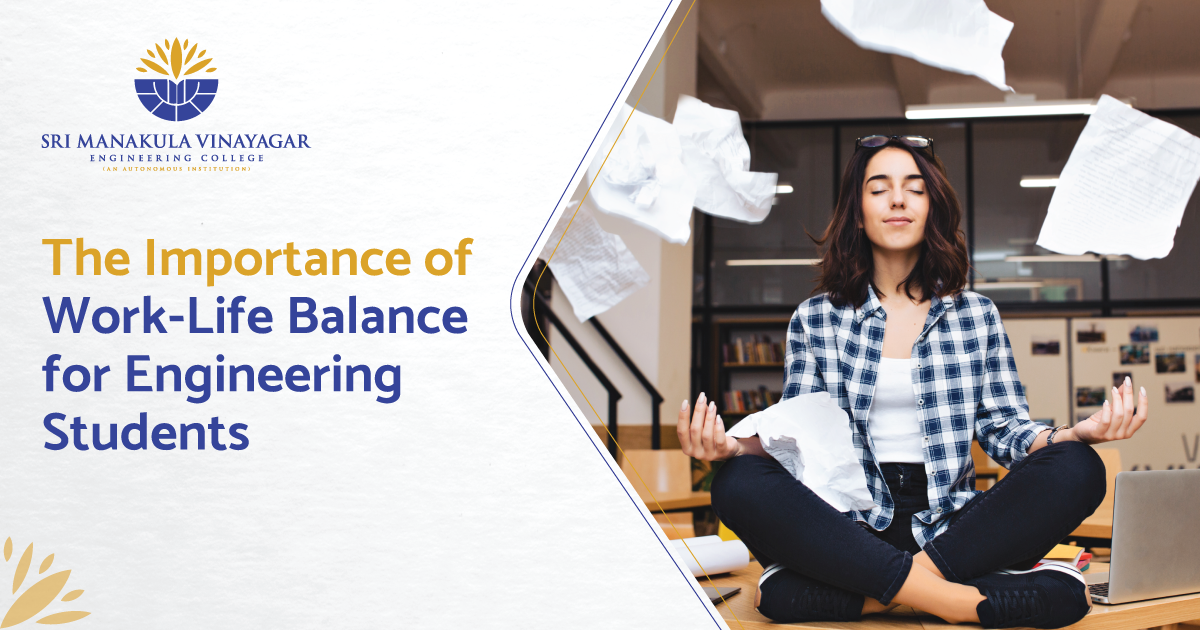
Academic pressures, deadlines, and career expectations are imposed on engineering students at an early age. SMVEC helps to keep a Work-Life Balance for Engineering Students, along with their personal life and studies, stress is minimised, and learning outcomes are improved. This will enable students to achieve success in the workplace in the long term, as well as prevent burnout.
Introduction
It is said that engineering is one of the most difficult academic career options, and it is justified. The lengthy lectures, the hard work in laboratories, the complicated homework, a project deadline, and the stress of the constant exams and tests can easily overwhelm the life of a student. It has been a misconception among many engineering students that the only way to achieve success is to sacrifice sleep, hobbies, and social time.
This course of action, however, usually backfires. The absence of rest makes people experience mental exhaustion, which causes poor concentration and loss of motivation. This is the place where the Work-Life Balance for Engineering Students becomes not only important but even necessary. The balance does not mean studying less, but it means being able to use time well so that the learning process will be effective and personal well-being will be preserved.
Understanding Work-Life Balance for Engineering Students
For an engineering student, work-life balance is a sustainable way of living where academics and personal life do not oppose but complement one another. It is about devoting time to studies and, at the same time, emphasising rest, physical well-being, mental clarity, and emotional stability.
Engineering education requires logical thinking, problem-solving minds, and creativity. It is these skills that work well when the mind is relaxed and in concentration. A balanced exercise routine will help students to be productive without toiling and being burdened every time.
Why Engineering Students Struggle to Maintain Balance
First of all, it is necessary to consider the reasons why balance is a headache to many students before looking at the importance of balance.
Students of engineering have to encounter:
- Large academic assignments and deadlines.
- The need to excel in grades.
- Family and peer expectations.
- Concern about being out of placement opportunities.
- Little opportunity to have rest or personal care.
All the attention on performance causes students to feel guilty of taking breaks when it is quite obvious that their body and mind need rest.
Why Work-Life Balance Is Crucial for Engineering Students
1. Protects Mental Health
Engineering students are becoming more stressed, anxious, and burnt out. There might be emotional exhaustion and demotivation when one is under continuous pressure with no time off. Balance is beneficial, as it allows the students to restart on a clean slate, be less stressed, and take problems more rationally.
A proper exercise regimen minimises the feeling of being under constant stress and makes students emotionally stable in their academic life.
2. Improves Academic and Learning Performance
As opposed to what many people believe, there is no direct correlation between the duration of study and comprehension. The concepts of engineering need profound concentration and understanding rather than time.
Balanced students tend to:
- Understand concepts faster
- Retain information longer
- Perform better during exams
- Minimise negligent errors.
When a mind is rested, it receives complex ideas better than a tired mind.
3. Enhances Physical Condition and Energy
Lack of attention to physical health has the potential to devastate academic performance. Sleep deprivation, physical inactivity, and unhealthy diets decrease the levels of concentration and energy.
Balanced students are concerned with:
- Proper sleep
- Physical activity
- Regular, healthy, nutritious meals
Such practices maintain the energy levels constant so that the students can remain alert in classes and the laboratories.
4. Develops good time management skills
Time management skills can be listed among the most valuable results of Work-Life Balance for Engineering Students. Scheduling the study time, attaining deadlines, and having time to rest, nevertheless, teaches students the skills of managing tasks effectively.
Such skills are invaluable as they go further in life when an engineer is supposed to work to meet the deadline without compromising quality.
5. Promotes Non-academic Development
Textbooks and exams cannot be considered as the only means of engineering education. Another thing that can be learnt during college life is communication skills, leadership qualities, and emotional intelligence.
Balanced students usually indulge in:
- Technical societies and clubs.
- Cultural and sporting activities.
- Teamwork, volunteering.
These experiences produce well-rounded people, not merely people with degrees.
Practical Ways Engineering Students Can Maintain Balance
Develop a Workable Everyday Program
The students should create a timetable that comprises classes, study, breaks, meals, and rest instead of planning unrealistic schedules. A realistic plan will minimise the stress at the last minute and enhance consistency.
Learn to Prioritise Tasks
Not all the tasks are equally important. The discovery of urgent and high-impact activities helps students avoid the needless burden and concentrate on matters of importance.
Take Minimal Breaks Without Conscience
Breaks in between the study sessions enhance concentration and avoid mental fatigue. Taking a break of several minutes without books can sometimes help the students to come back to the task with more concentration.
Stay Physically Active
Workout does not consume time; it saves it through better energy, mood, and concentration. Even light exercise, such as walking or stretching, would refresh the mind.
Setting Boundaries between Work and Personal Life
The combination of study and rest will result in inefficiency. The boundaries allow students to have maximum personal time as well as be productive during the duration of study.
Role of SMVEC in Supporting Balance
At SMVEC College, students have a significant influence on the kind of lifestyle they lead. Promoting systematic learning, mentoring, practical exposure, technological guidance, and interaction with students produces a healthier academic atmosphere. And they are also guided to carry a healthy Work-life balance of Engineering students.
The college academic systems that support students promote their attentiveness to learning, as opposed to being pressured all the time, which helps them develop discipline without burning them out. SMVEC ensures students have the space to pursue passions alongside their academic goals. As they focus on holistic development, the students are bound to embrace healthier habits.
Long-Term Benefits of Maintaining Balance
The culture that students develop in the course of academics in the engineering college is likely to be transferred into the workforce. Early learner engineers are well prepared to meet the pressure, deadlines, and responsibility in the workplace.
Long-term benefits include:
- Stress management in the workplace.
- Improved productivity
- Higher job satisfaction
- Better individual relationships.
Finally, the Work-Life Balance of Engineering Students not only prepares them with the tests, but also with life outside college.
Conclusion
It is not the hours of studying that make one a successful engineer. The secret of success is in consistency, clarity, and well-being. Maintaining balance enables students to excel in their academic tasks as they go through an enjoyable college life.
Considering healthier habits and the importance of a balance at a young age, the students of engineering will be able to establish great foundations not only in professional success but personal well-being.
FAQs
1. What is the importance of work-life balance in engineering students?
It aids in the reduction of stress, enhancement of concentration, and both mental and physical health throughout challenging academic routines.
2. Is it true that balanced students can be academically better?
Yes. Balanced students find it easy to grasp concepts and have better results in exams.
3. What can be done to prevent burnout in engineering students?
Through time management, frequent breaks, physical health, and expectation management.
4. Does focusing on balance affect placements or career growth?
Not negatively. In fact, balanced students often develop better problem-solving and communication skills valued by employers.
5. Are work-life balance skills useful after graduation?
Absolutely. These habits help engineers manage professional responsibilities, deadlines, and personal life more effectively.