For more details about the fees and admission process, click here.

Vision
To provide quality education in Biomedical Engineering focused on promoting continuous enrichment in the relevant research field and innovations in medical diagnosis for human health care.
Mission
M1: Medical Science Engineering
To provide quality Biomedical Engineering education that integrates engineering principles with biomedical sciences.
M2: Research and Development
To develop Biomedical engineers to apply innovative strategies for the design and development of medical equipment.
M3: Industrial Intelligence
To incorporate novel technologies towards the healthcare industrial needs for medical applications and to become an entrepreneur.
M4: Ethical Responsibilities
To impart the desirable skill sets to become globally competent ethical professional.
PROGRAM EDUCATIONAL OBJECTIVES (PEOs)
PEO1: Professional Skills
To become outstanding professionals to demonstrate their skills in solving challenges for healthcare diagnosis.
PEO2: Higher Education and Research
To work successfully in multi-disciplinary environments or pursue higher studies.
PEO3: Entrepreneurial Competencies
To address the challenges in biomedical engineering that supports employment and entrepreneurship to serve the society.
PEO4: Leadership Quality
To enable the graduates to exhibit leadership, make decisions with ethical responsibilities.
PROGRAM SPECIFIC OUTCOMES (PSOs)
PSO1: Knowledge in Biomedical Engineering
Comprehending fundamental concepts in Biomedical Engineering to meet the emerging trends.
PSO2: Problem Solving in Medical Diagnosis
Apply Bio Signal and Image processing techniques to solve real time problems in medical field.
PSO3: Troubleshooting of Medical Equipment
Troubleshoot the faulty medical Equipment used in health care industry.
PO1: Engineering Knowledge
Apply the knowledge of mathematics, science, engineering fundamentals, and an engineering specialization to the solution of complex engineering problems.
PO2: Problem Analysis
Identify, formulate, research literature, and analyze complex engineering problems reaching substantiated conclusions using first principles of mathematics, natural sciences, and engineering sciences.
PO3: Design/Development of Solutions
Design solutions for complex engineering problems and design system components or processes that meet the specified needs with appropriate consideration for the public health and safety, and the cultural, societal, and environmental considerations.
PO4: Conduct Investigations of Complex Problems
Use research-based knowledge and research methods including design of experiments, analysis and interpretation of data and synthesis of the information to provide valid conclusions.
PO5: Modern Tool Usage
Create, select, and apply appropriate techniques, resources, and modern engineering and IT tools including prediction and modeling to complex engineering activities with an understanding of the limitations.
PO6: The Engineer and Society
Apply reasoning informed by the contextual knowledge to assess societal, health, safety, legal and cultural issues and the consequent responsibilities relevant to the professional engineering practice.
PO7: Environment and Sustainability
Understand the impact of the professional engineering solutions in societal and environmental contexts, and demonstrate the knowledge of and need for sustainable development.
PO8: Ethics
Apply ethical principles and commit to professional ethics and responsibilities and norms of the engineering practice.
PO9: Individual and Team Work
Function effectively as an individual, and as a member or leader in diverse teams, and in multidisciplinary settings.
PO10: Communication
Communicate effectively on complex engineering activities with the engineering community and with society at large, such as, being able to comprehend and write effective reports and design documentation, make effective presentations, and give and receive clear instructions.
PO11: Project Management and Finance
Demonstrate knowledge and understanding of the engineering and management principles and apply these to one’s own work, as a member and leader in a team, to manage projects and in multidisciplinary environments.
PO12: Life-long Learning
Recognize the need for, and have the preparation and ability to engage in independent and life-long learning in the broadest context of technological change.

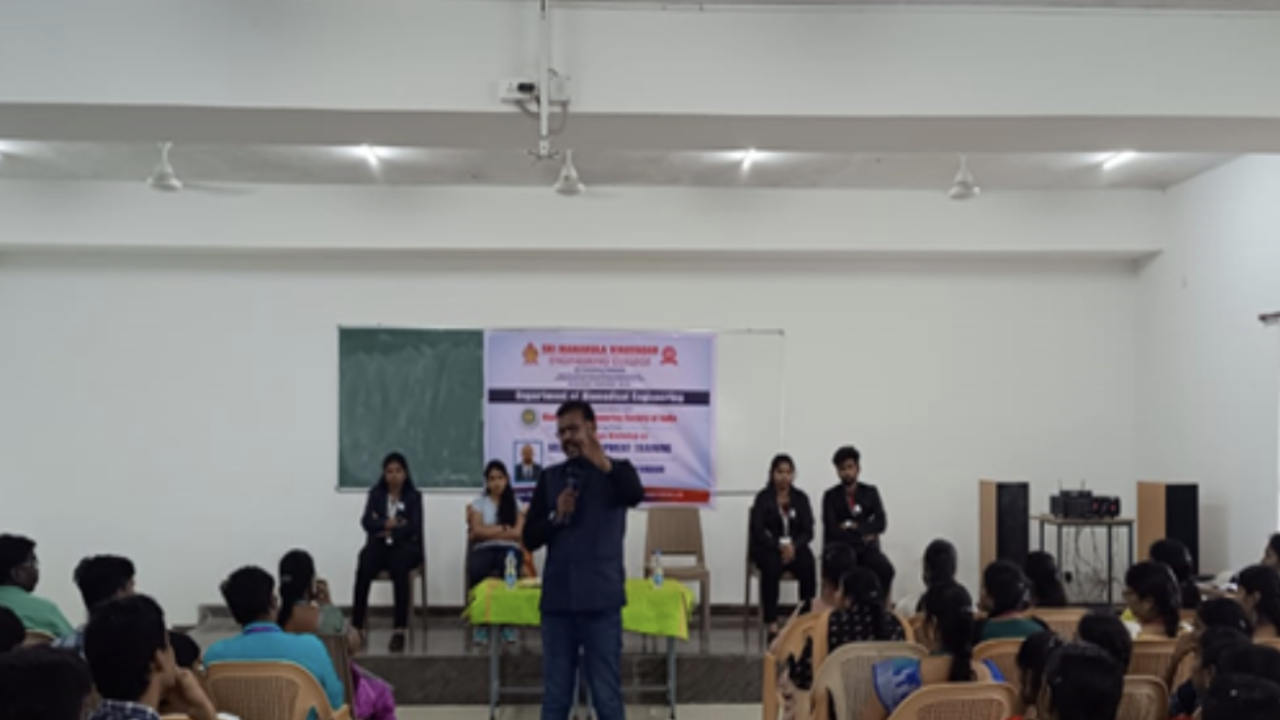
The Biomedical Engineering Department at Sri Manakula Vinayagar Engineering College in Puducherry is the largest and most advanced in the region, and the first to offer graduate training in this field. Our talented students and dedicated research faculty engage in interdisciplinary projects addressing healthcare needs in Puducherry and India. We excel in community engagement, tackling real problems through collaboration. Our courses equip students to be innovative and translational in healthcare solutions. Focus areas include Computational and Algorithm Development, Regenerative Engineering, Bioinstrumentation, Biophysics, Biomaterials, Nanotechnologies, Clinical Engineering, and Hospital Design. Join our expanding global network and the Biomedical Engineering family.
Our Department of Biomedical Engineering at Sri Manakula Vinayagar Engineering College offers a B.Tech in Biomedical Engineering, integrating engineering principles with medical sciences to advance healthcare technologies. Recognised as one of the best biomedical engineering colleges in Pondicherry, we provide a curriculum that bridges theory and innovation.
For the 2019-2023 batch, 92% of students were placed in various companies, with wages ranging from 1.8 to 7 LPA. For the 2020-2024 class, 95% of students have already been placed, with offers of up to 4.76 LPA. Our placement record illustrates the department's dedication to students' professional success.
With such high success rates, we are consistently rated among the top biomedical engineering colleges in Tamilnadu and often compared favorably in terms of fees of biomedical engineering colleges in Pondicherry.
For more details about the fees and admission process, click here.
Explore the BME Department's outstanding achievements, where innovation is transforming healthcare. From pioneering research to significant developments, our dedication to biomedical excellence creates innovations that improve people's lives worldwide. Our continued performance has secured our reputation as one of the top 10 biomedical engineering colleges in Pondicherry.
Our faculty has expertise in various fields, including Sensor Networks, Signal Processing, Biotechnology, Bioengineering, Wireless Communication, Electronics and Communication Engineering, Nanoscience and Technology, Embedded Systems, Medical Electronics, Digital Signal Processing, and Rehabilitation Instrumentation. This range of experience guarantees that our students receive a comprehensive education, further solidifying our place among the best biomedical engineering colleges in Pondicherry.
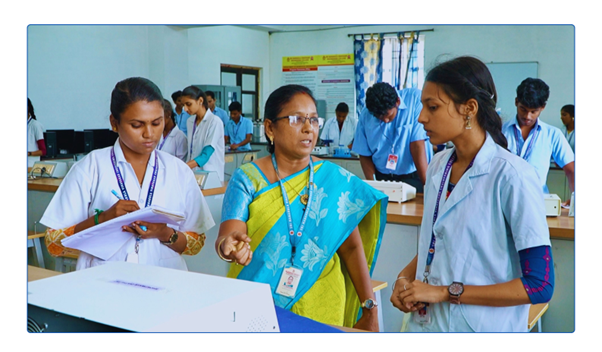
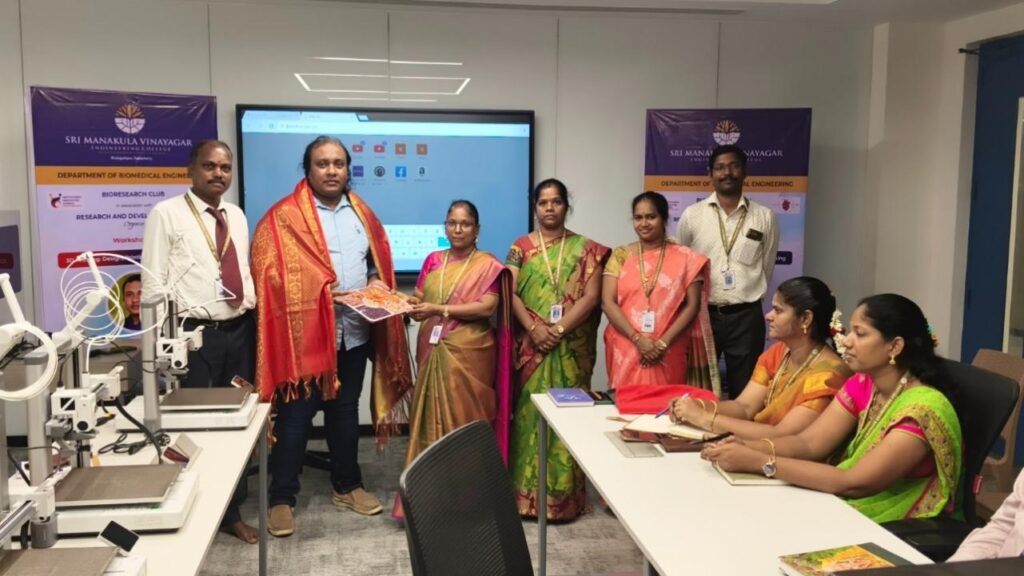
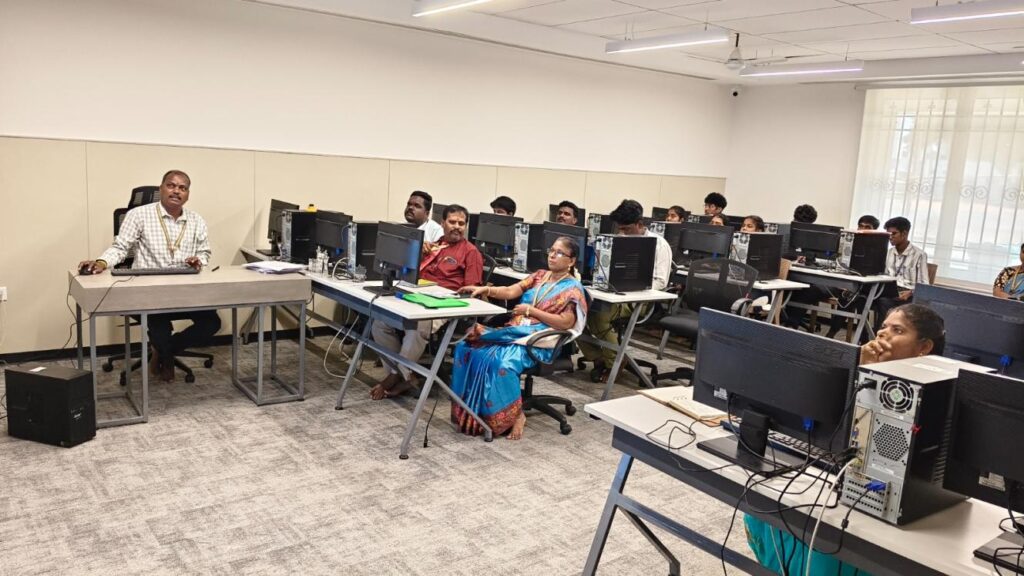
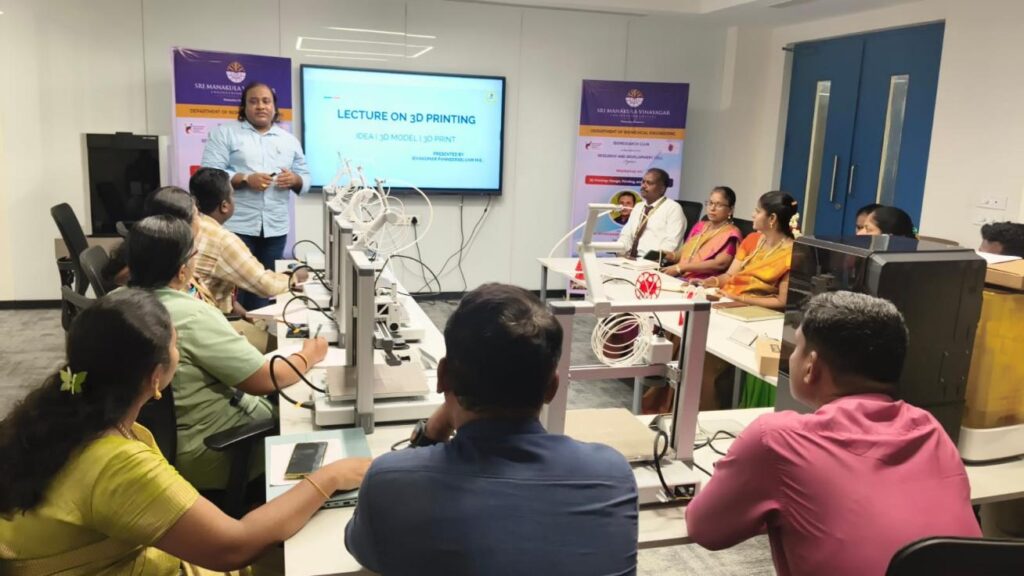
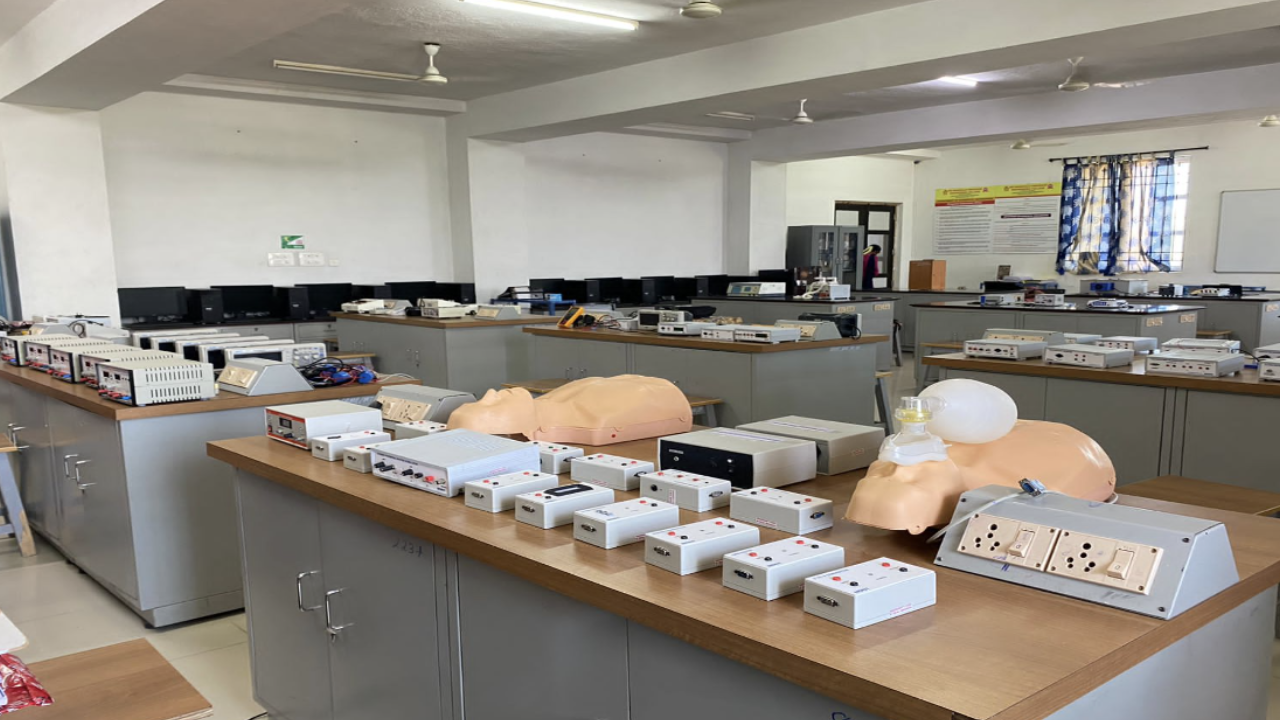
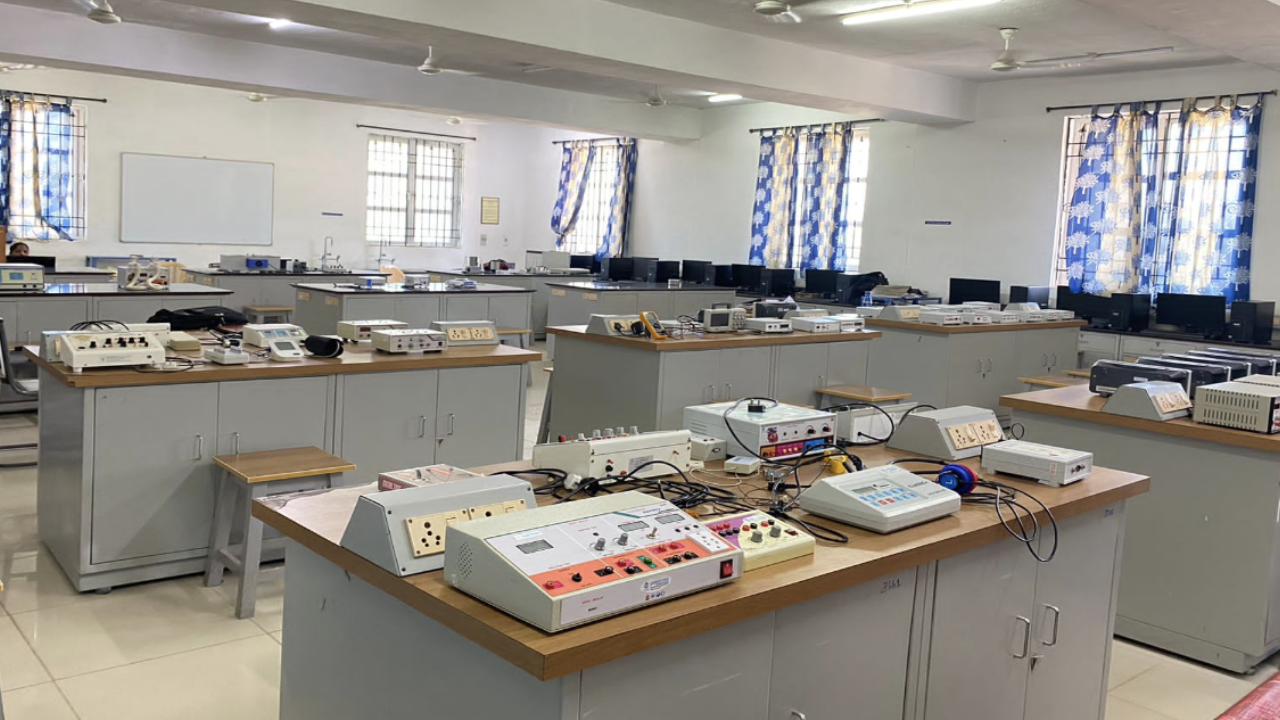
Our department has cutting-edge resources, such as labs for physiology, biochemistry, pathology, microbiology, and biomedical instrumentation. We also have dedicated labs for electron devices and circuits, biosensors and transducers, linear and digital integrated circuits, biosignal processing, and medical image processing. In addition, our students get hands-on experience in the Computation Laboratory, Microcontroller and Medical Application Laboratory, Embedded Systems for Healthcare Laboratory, Diagnostic and Therapeutic Equipment Laboratory, and Medical Internet of Things Lab.
These institutes offer substantial practical training and research opportunities for biomedical engineers. When compared to the fees of biomedical engineering colleges in Pondicherry, our infrastructure offers unmatched value for money.
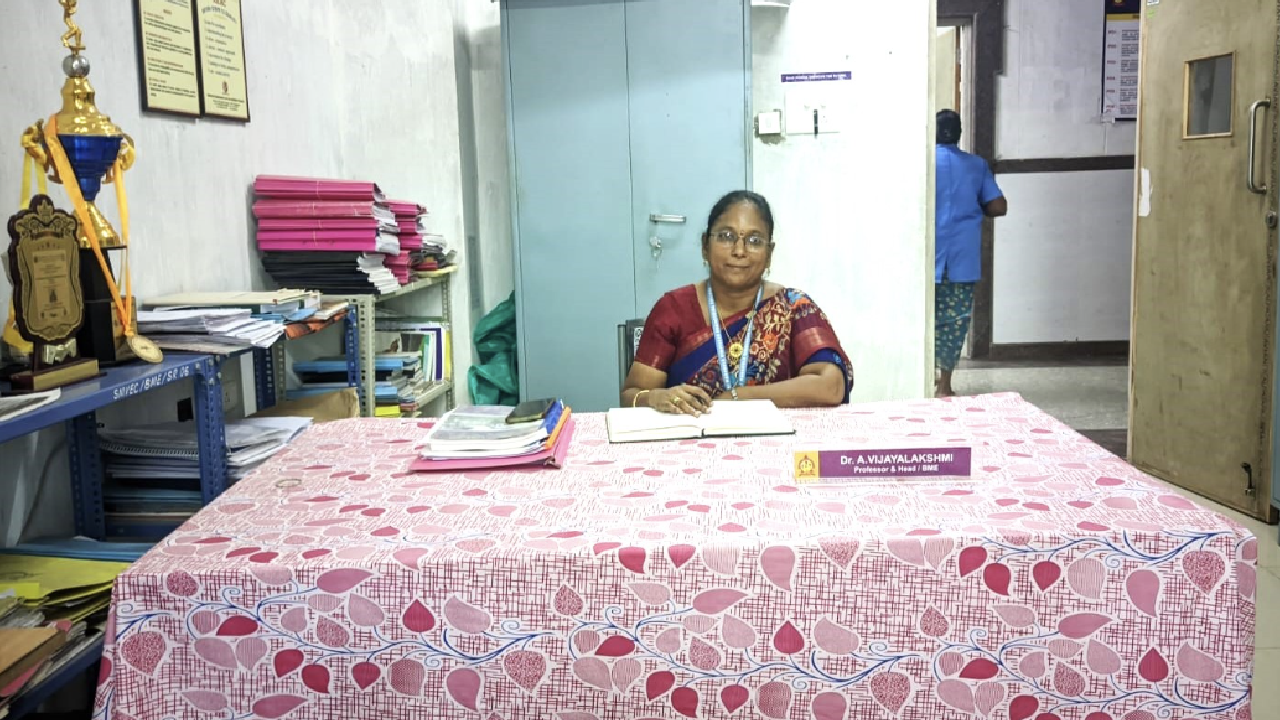
If you have any inquiries regarding the department, please feel free to reach out to us. We are here to assist you with any questions or information you may need. Dr. A. Vijayalakshmi, Professor and Head, Department of Biomedical Engineering

If you have any inquiries regarding the department, please feel free to reach out to us. We are here to assist you with any questions or information you may need.
Dr.A.Vijayalakshmi, Professor and Head,
Department of Biomedical Engineering
1. Why is SMVEC one of the top biomedical engineering colleges in Pondicherry?
SMVEC is considered one of the top biomedical engineering colleges in Pondicherry because of its outcome-based curriculum, advanced laboratories, experienced faculty, strong industry collaboration, and excellent placement performance in healthcare technology sectors.
2. How does SMVEC compare with other biomedical engineering colleges in Pondicherry?
Among biomedical engineering colleges in Pondicherry, SMVEC stands apart for its modern infrastructure, research-driven teaching, hands-on clinical technology exposure, and partnerships with hospitals and medical device companies.
3. Is SMVEC recognised among the top biomedical engineering colleges in Tamilnadu?
Yes, SMVEC is widely recognised among the top biomedical engineering colleges in Tamilnadu due to its strong academic results, innovation-focused curriculum, high placement rates, and emphasis on emerging healthcare technologies.
4. What career paths are available after biomedical engineering at SMVEC?
Students move into careers in medical device development, hospital engineering departments, biomedical research labs, healthcare IT companies, diagnostics firms, and biotechnology industries, with roles in design, testing, data analysis, and clinical support.
5. What facilities make SMVEC a leading biomedical engineering college in Pondicherry and Tamilnadu?
SMVEC provides specialised labs for biomedical instrumentation, biosignal processing, medical imaging, embedded healthcare systems, medical IoT, diagnostics equipment, and biotechnology, giving students strong real-world technical training.

Hi, I'm SMVEC Chatbot
How can I help you?
SMVEC 25 Years of Legacy | The Official Documentary