Day 1 – Inaugural Session
A Grand Beginning
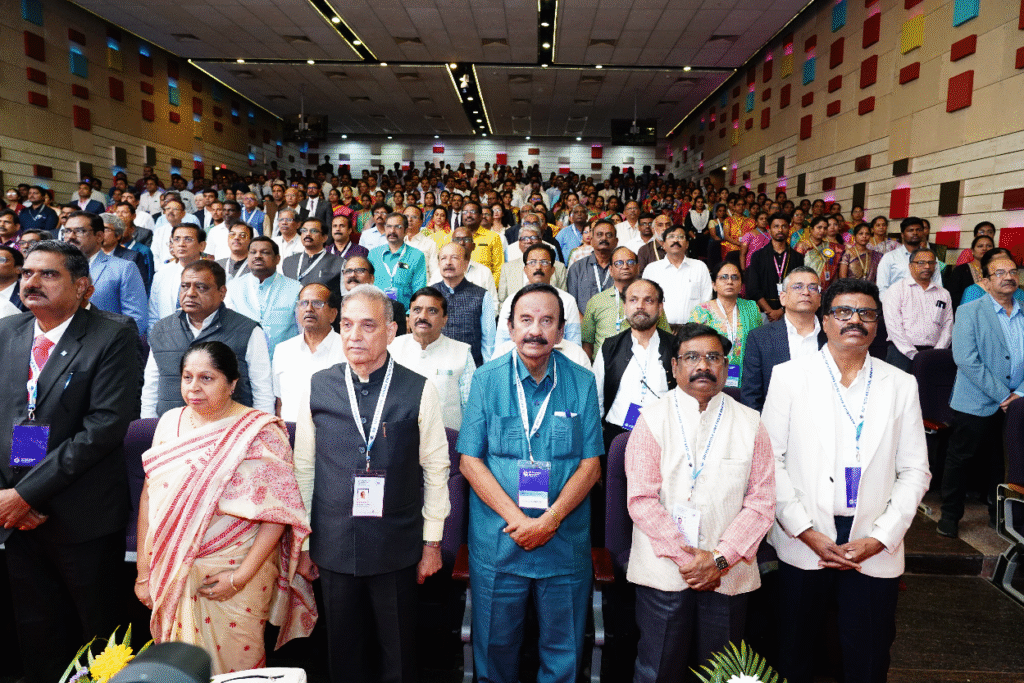
The 55th ISTE National Annual Faculty Convention commenced with great enthusiasm and a sense of pride at Sri Manakula Vinayagar Engineering College (SMVEC). The event opened on a traditional and inspiring note, beginning with a soulful prayer song that set a serene and positive atmosphere for the day.
Following the invocation, the gathering stood together for the SMV Anthem, a moment that reflected unity, institutional pride, and the shared values of the SMVEC community.
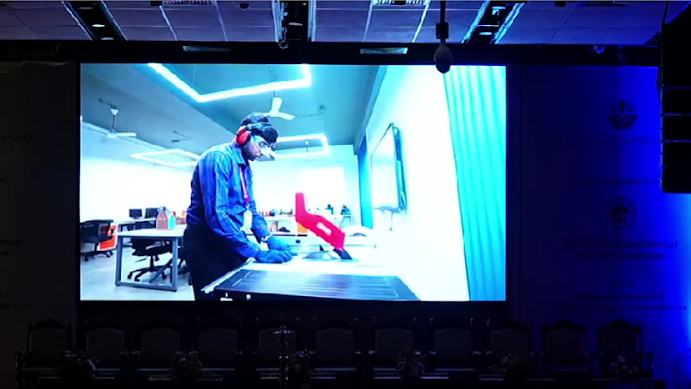
To further highlight the achievements and milestones of the institution, the audience was presented with an AV Treat, showcasing SMVEC’s academic excellence, infrastructure, innovations, and its commitment to holistic education. The visuals offered a glimpse into the college’s dynamic growth and its contributions to the educational and societal landscape.
Spreading Light and Wisdom — The Lamp Lighting Ceremony
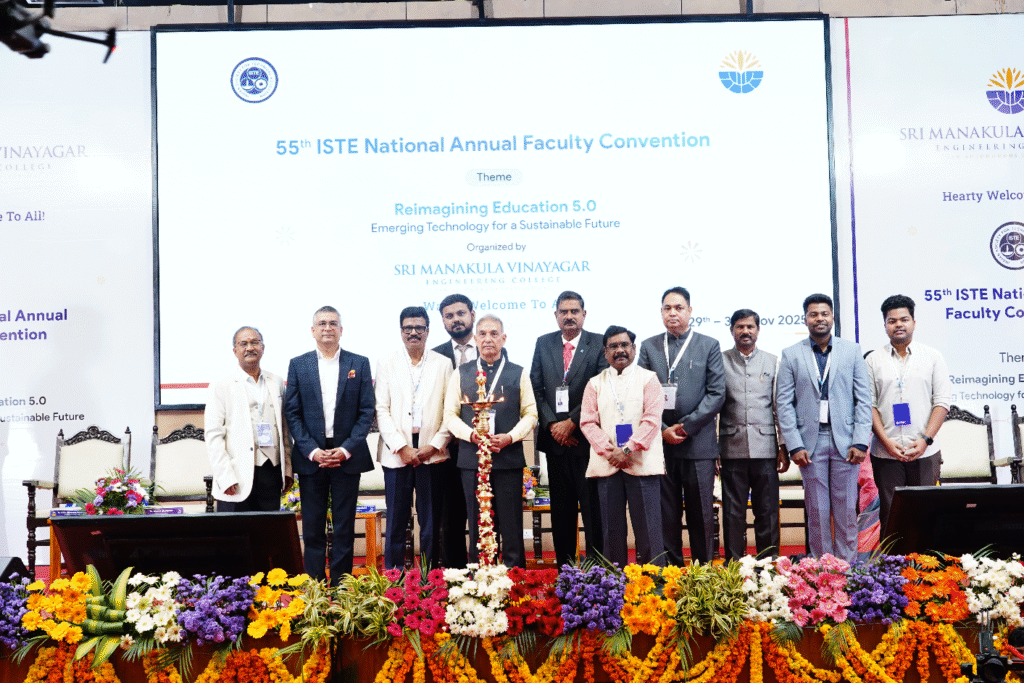
The inaugural session of the 55th ISTE National Annual Faculty Convention continued with the traditional and auspicious Lamp Lighting Ceremony, symbolizing knowledge, enlightenment, and new beginnings.
Distinguished dignitaries, academic leaders, and honoured guests were invited onto the stage to light the ceremonial lamp. As the flame glowed brighter, it represented the collective commitment to wisdom, innovation, and continuous learning—values that lie at the heart of both ISTE and SMVEC.
Welcome Address
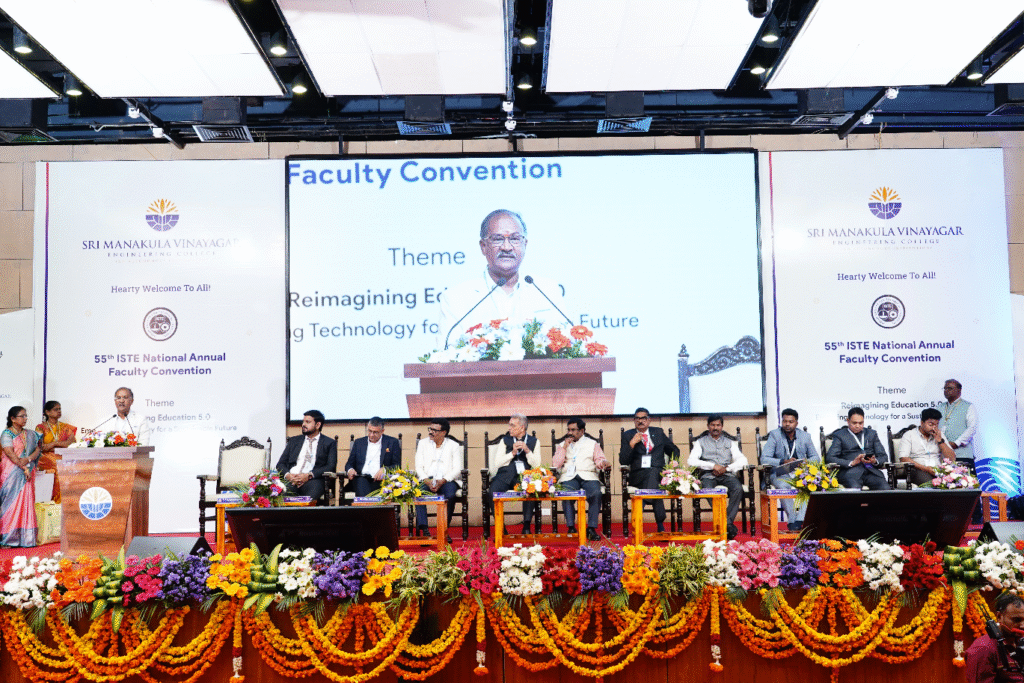
The Welcome Address was delivered by Dr. V.S.K. Venkatachalapathy, Director of SMVEC, who extended a warm and respectful greeting to all distinguished guests, dignitaries, ISTE leaders, vice-chancellors, advisory committee members, organizing teams, faculty participants, award recipients, student volunteers and attendees from across the nation. He expressed gratitude to ISTE for selecting SMVEC as the host institute for this prestigious 55th National Annual Faculty Convention, calling it a moment of honour and pride for the institution.
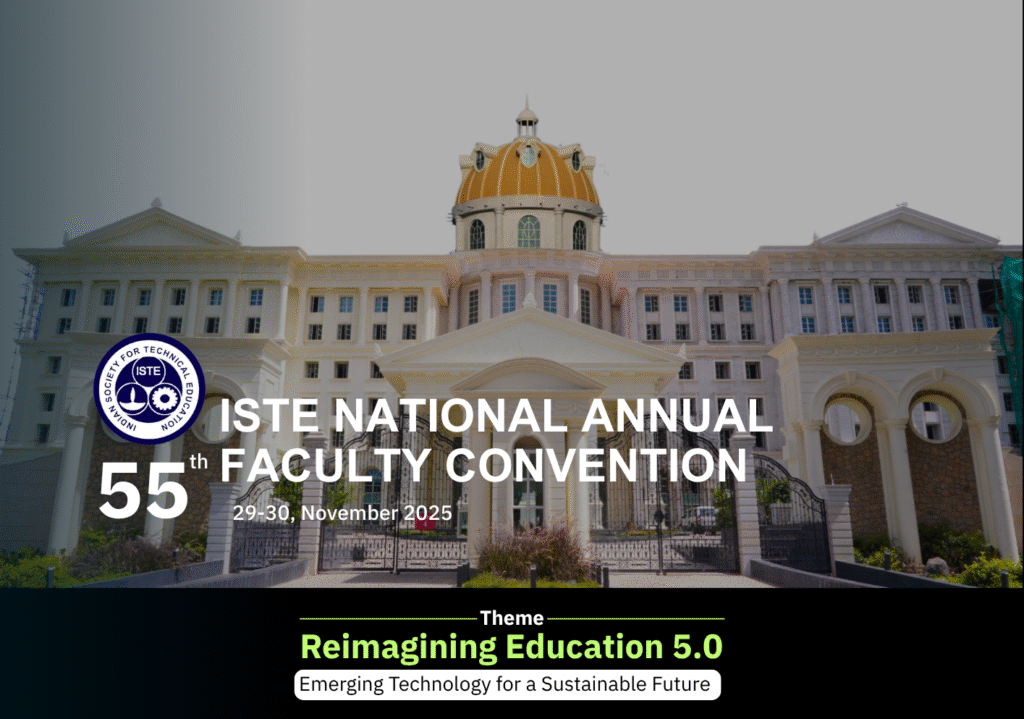
Highlighting this year’s theme—“Reimagining Education 5.0: Emerging Technologies for a Sustainable Future”—he emphasized the evolving role of technical education in fostering innovation, interdisciplinary collaboration and future-ready mindsets among faculty and students. Heacknowledged the presence of nearly 400 ISTE members and 3,000 student members from the campus, and extended a special welcome to the Chief Guest Dr. Satyapal Singh, along with other eminent leaders including vice-chancellors, ISTE office bearers, executive council members, organising chairs and secretaries. He recognized the contributions of institutional leaders, appreciated the dedicated planning of the organising committee and congratulated the award winners whose achievements exemplify excellence in technical education. Concluding his address, he expressed confidence that the convention would be a landmark event, inspiring meaningful dialogue, collaboration and transformative ideas shaping the future of Engineering Education 5.0.
Honouring the Chief Guest — A Moment of Pride and Respect
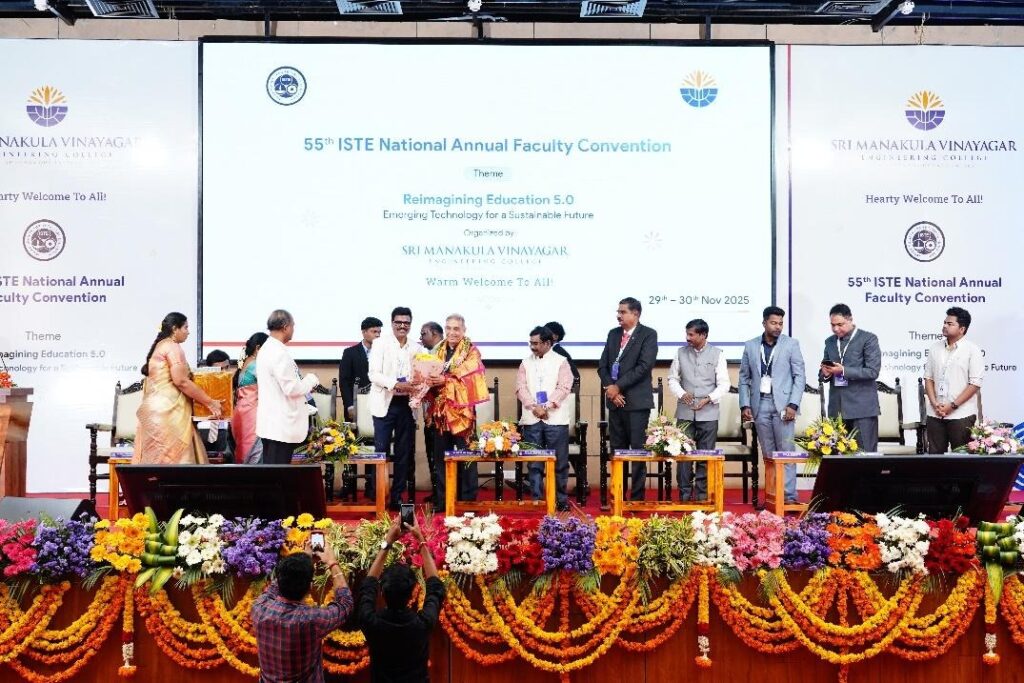
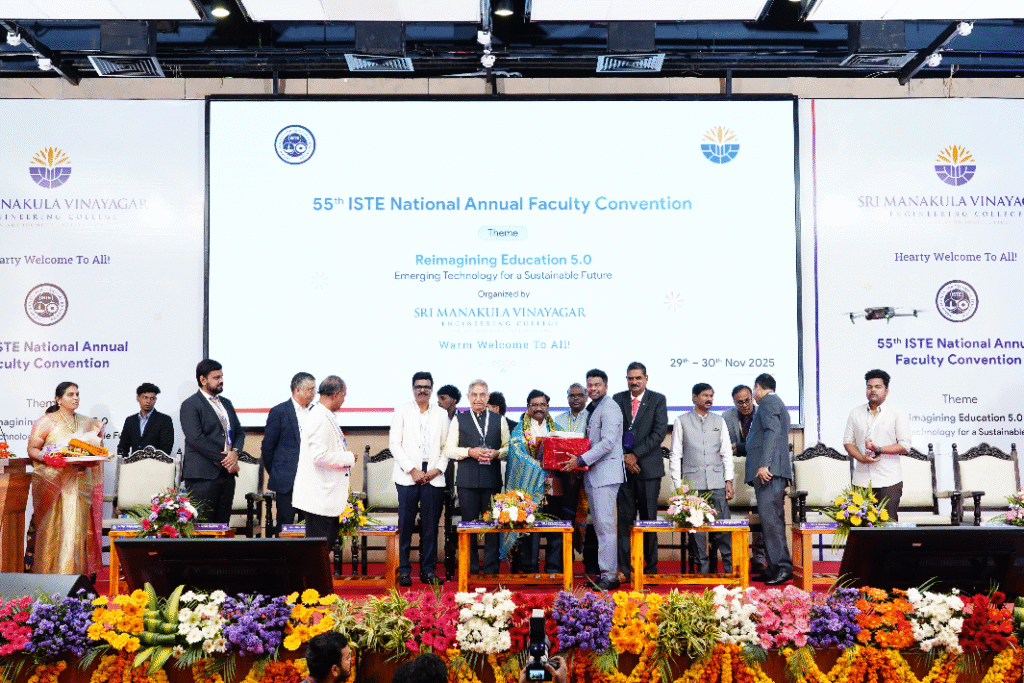
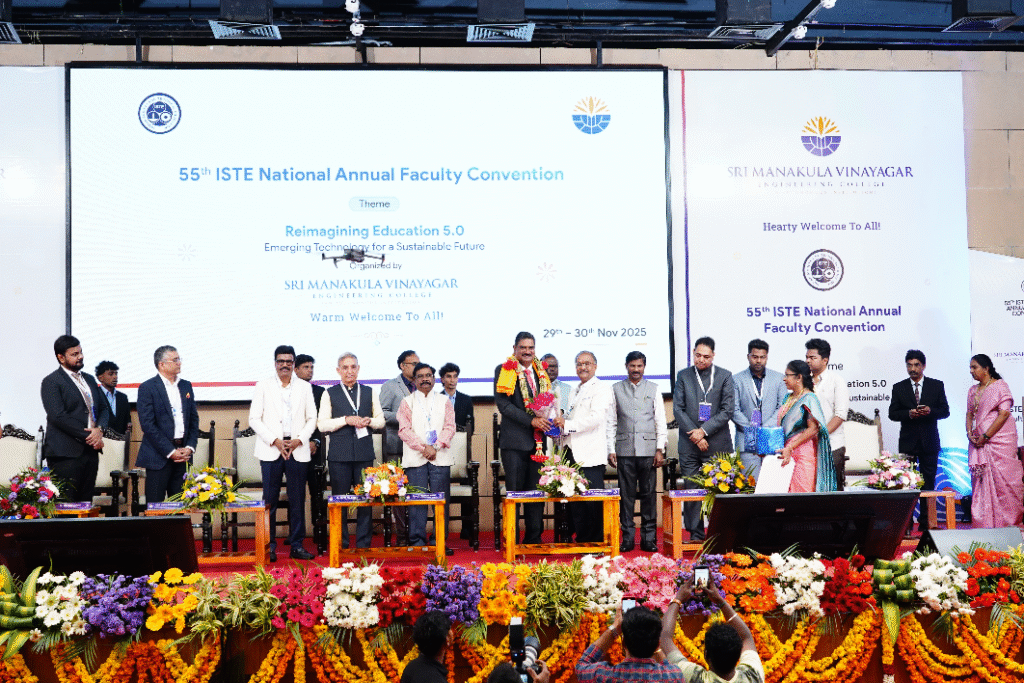
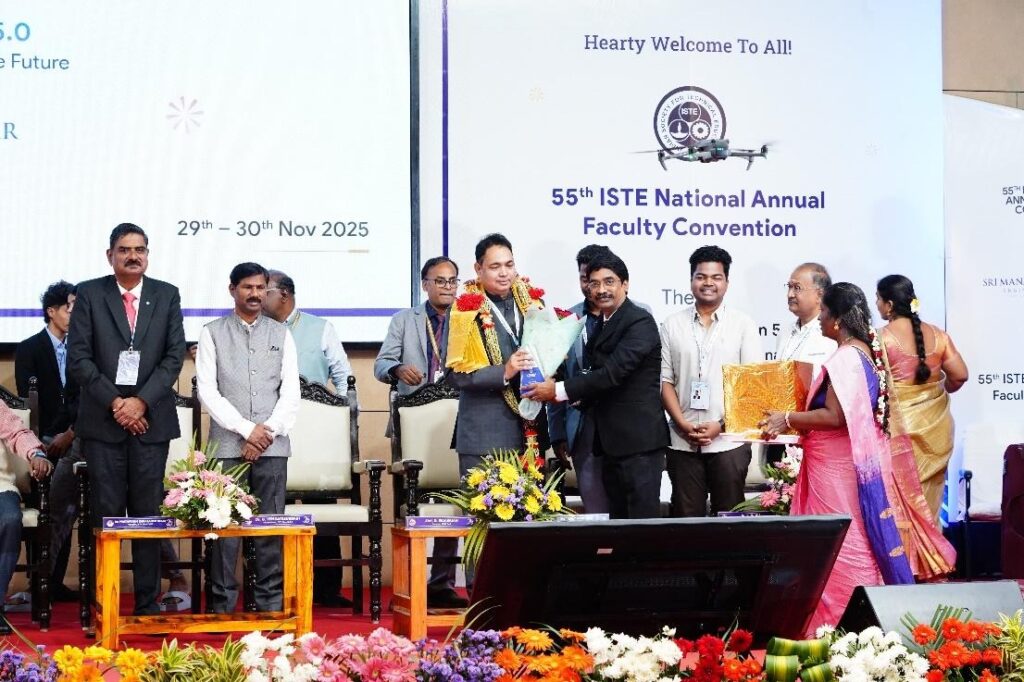
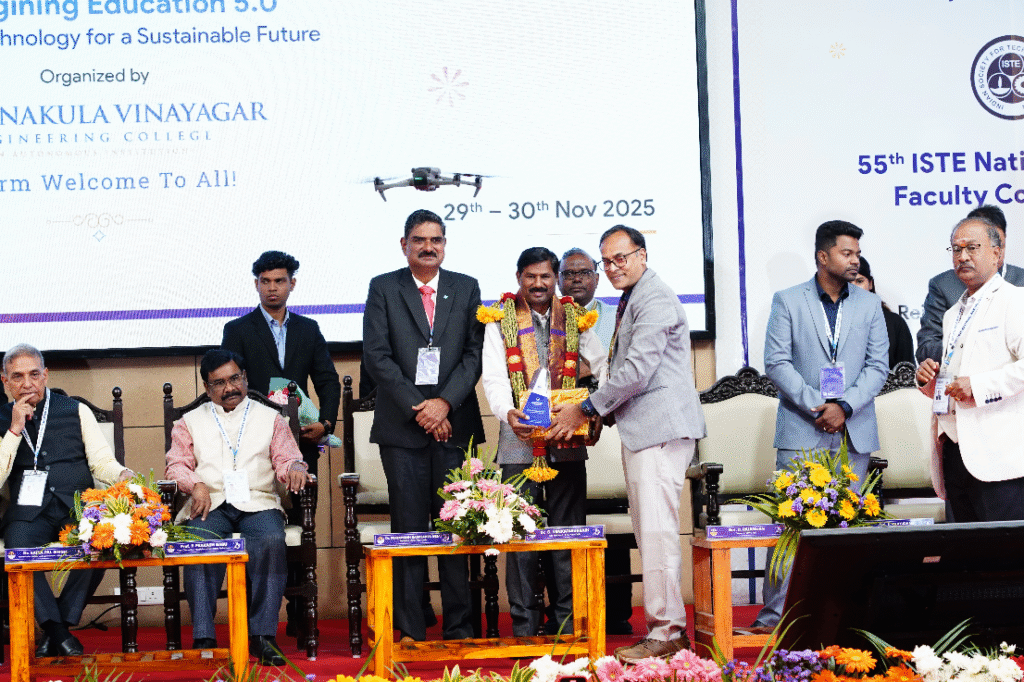
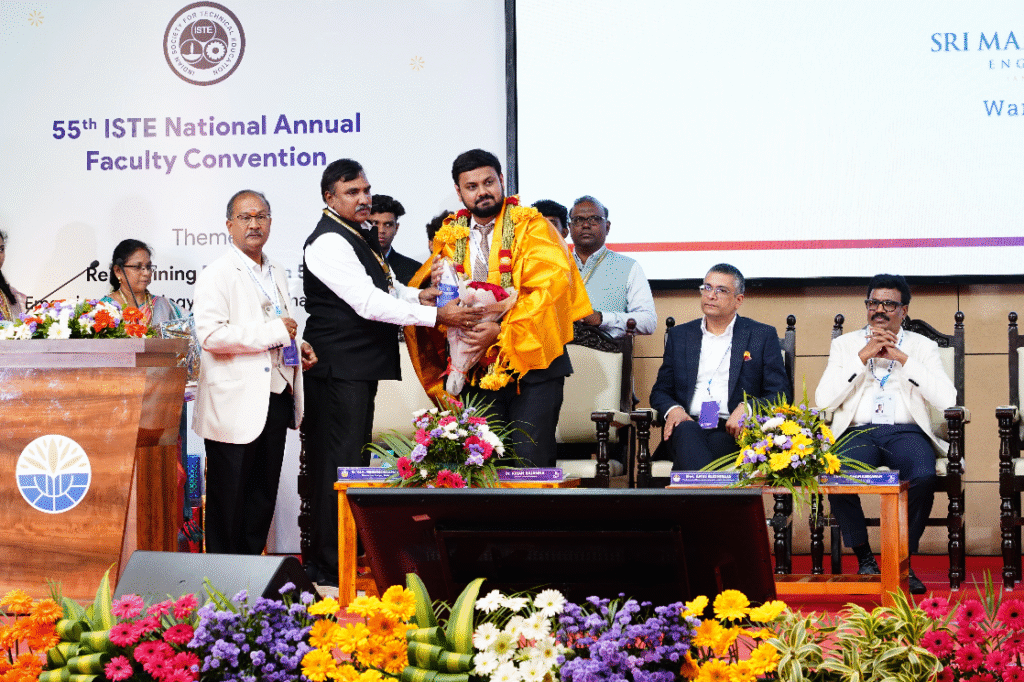
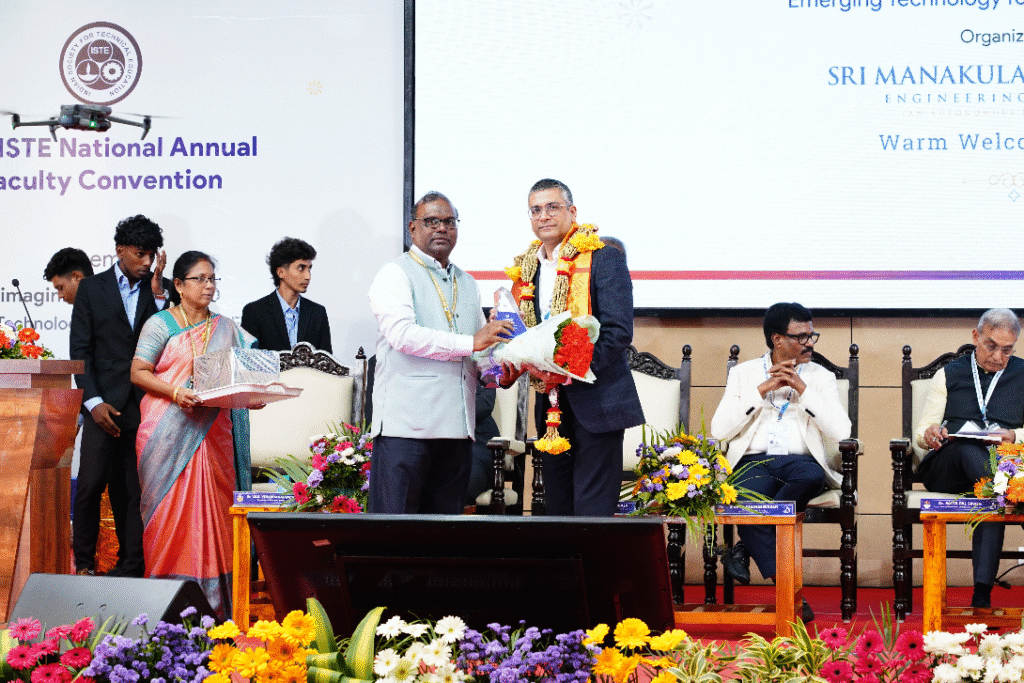
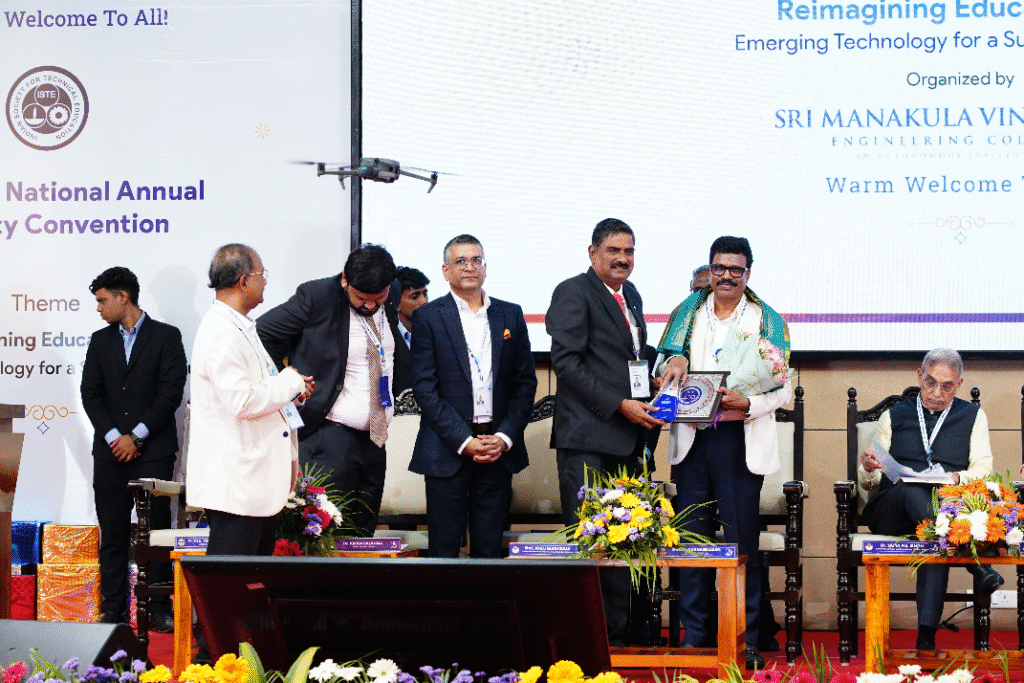
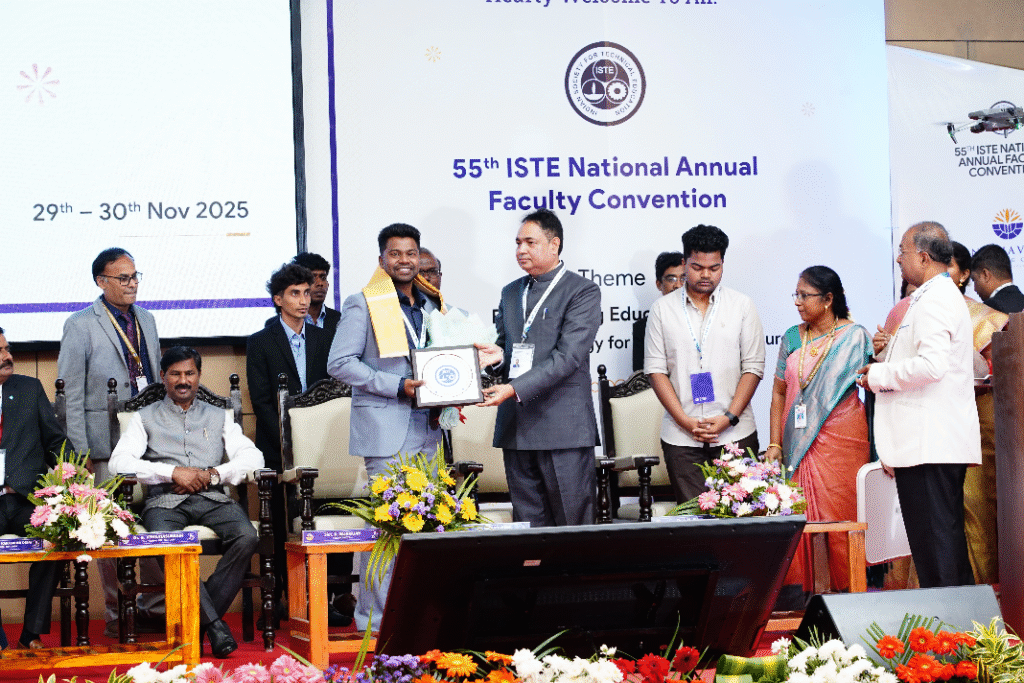
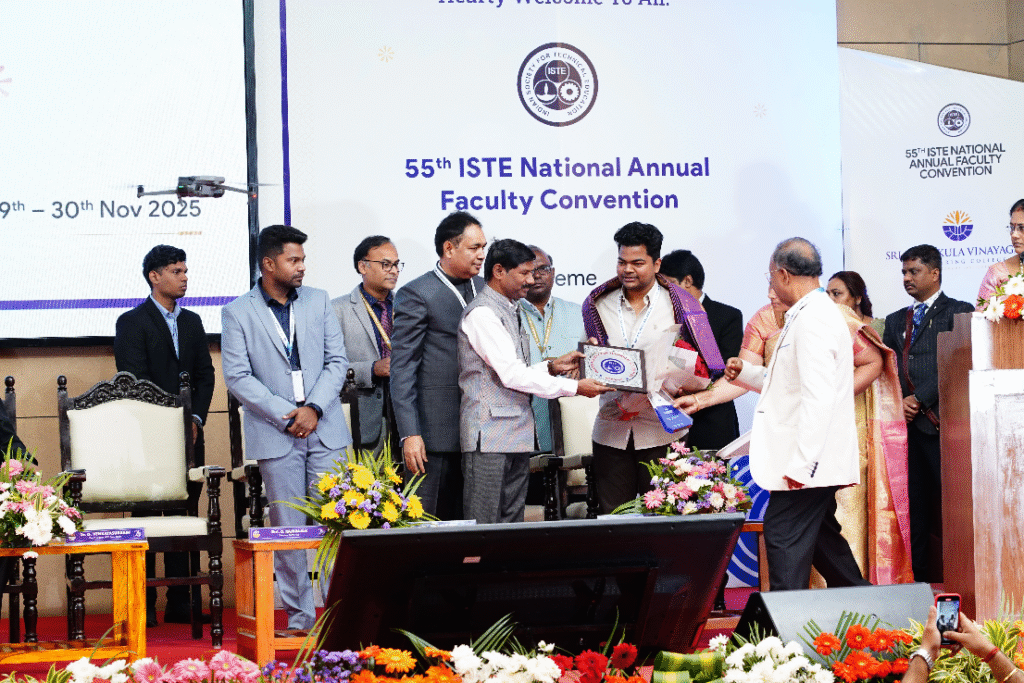
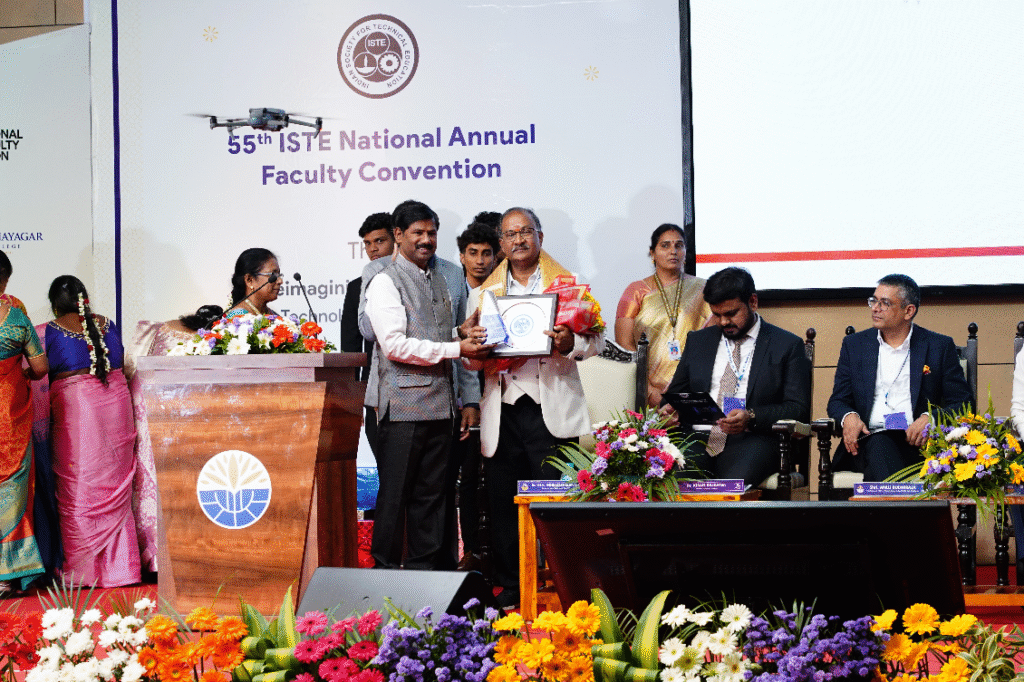
The inaugural ceremony of the 55th ISTE National Annual Faculty Convention was elevated with the dignified Honouring of the Chief Guest, a gesture that reflected deep respect and admiration. The esteemed Chief Guests was warmly felicitated by the organising committee and institutional leaders of SMVEC. Their remarkable contributions to national education reforms, public administration, and leadership have inspired educators and institutions across the country, making his presence highly significant for this prestigious gathering.
Insightful And Forward-Looking Address

Shri. D. Rajarajan, Pro-Chancellor of Takshashila University and Treasurer of SMVET, delivered an insightful and forward-looking address, warmly welcoming all dignitaries, speakers, faculty members and participants to the 55th ISTE National Annual Faculty Convention. He expressed his pride in SMVEC hosting this prestigious event and shared a compelling vision for the future of education driven by Artificial Intelligence.
Using the evolution from physical maps to Google Maps as an analogy, he explained how AI will transform education—not by replacing teachers, but by serving as a co-pilot to enhance teaching, personalise learning, and strengthen institutional effectiveness. He outlined SMVEC’s mission to become India’s first truly AI-first campus, where teaching, examinations and admissions are reimagined through intelligent systems. He highlighted the power of AI-enabled personalised learning, smart tutoring systems, teacher co-pilot tools, automated assessments, Bloom’s taxonomy–aligned question generation, continuous evaluation dashboards and data-driven admission strategies aimed at matching students to the right programmes. Emphasising that AI will multiply the capabilities of educators rather than diminish them, he concluded by reaffirming the institution’s commitment to creating a future-ready educational ecosystem and extended his heartfelt thanks to all participants for being part of the convention.
Energetic And Thought-Provoking Address

Shri. M. Dhanasekaran, Chancellor of Takshashila University and Managing Director of SMVET, delivered an energetic and thought-provoking address, beginning by warmly welcoming all dignitaries, speakers, Vice-Chancellor Prof. Prakash, Mr. Zainab Shah, committee members, faculty and students. He acknowledged the extensive welcome remarks and emphasized that the audience deserved renewed enthusiasm for hearing the distinguished speakers. Highlighting three key pillars—faculty, students and the institution—he reflected on the evolving landscape of teaching and learning.
He noted how transitions from blackboard teaching to PowerPoint presentations, and now to AI, show that while technology supports education, physical teaching and meaningful interaction remain irreplaceable. He urged faculty to embrace a culture of questioning, practical learning, industry exposure and continuous skill-building. Addressing students, he stressed the importance of personalized learning, consistent attention, self-learning beyond the classroom and building strong digital profiles that reflect learning levels and competencies—similar to global trends in education and recruitment. Speaking about institutional vision, he shared plans to build a customized small language model tailored to SMVET’s ecosystem of 25,000+ students and 300+ courses, enabling smarter academic operations and learner support. He affirmed that the institution is working closely with experts to establish state-of-the-art AI capabilities, ensuring SMVET becomes a model institution in the coming years. He concluded by expressing heartfelt gratitude to ISTE and all participants for honouring the institution through their presence and support.
Inaugural Address
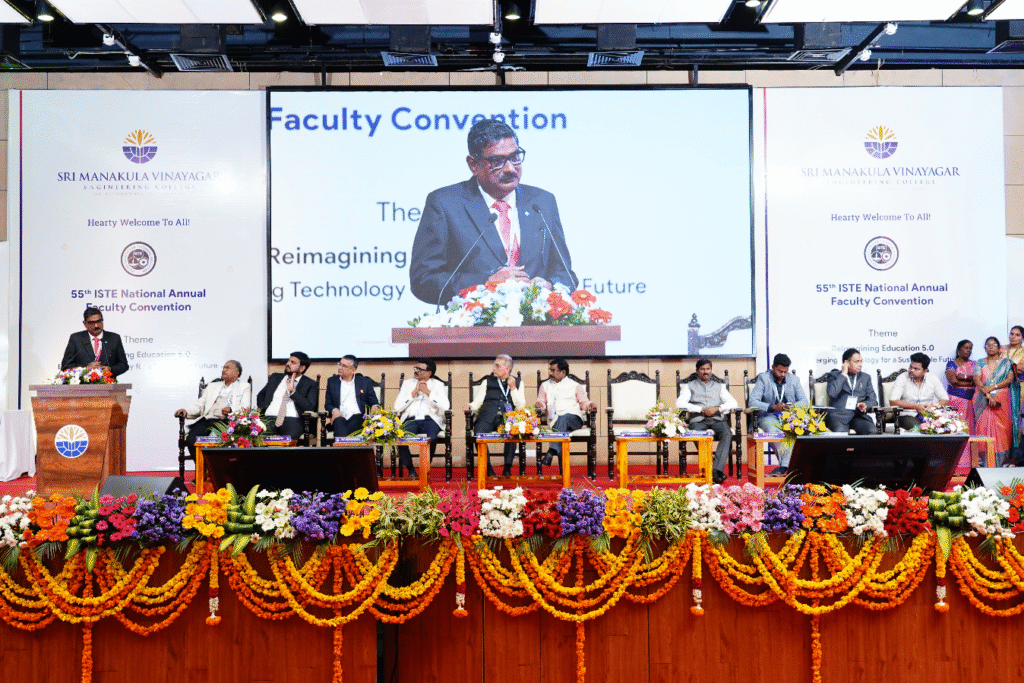
Dr. Pratapsinh Kakasaheb Desai, President, ISTE, New Delhi, delivered an inspiring inaugural address, expressing his pride in welcoming delegates to the 55th ISTE Annual National Faculty Convention at Sri Manakula Vinayagar Engineering College, set amidst the serene backdrop of Madagadipet. He highlighted the significance of the convention—not merely to experience hospitality, but to collectively redefine the evolving role of teachers in an era of rapid technological change. He reflected on ISTE’s rich legacy since its origins in 1941, its transformation in 1968, and its current standing as one of the world’s largest professional bodies with 1,72,000 life members, 4,300+ institutional members including all IITs, NITs, IISc, and a nationwide presence across every district.
He emphasised the importance of such conventions in enabling faculty to exchange best practices, assess their national standing, enhance knowledge horizons, and celebrate excellence through recognition—an integral part of Indian culture. He eloquently referenced India’s tradition of honouring wisdom, citing examples from ancient scholars and scriptures. Addressing the rapid technological transformation impacting society, he urged teachers to shift from being mere transmitters of information to facilitators who help students convert information into knowledge and knowledge into real-world technological solutions. He reminded that meaningful innovation is measured by its ability to transform lives and society at scale. Dr. Desai also appreciated the dedicated efforts of the awardees, acknowledging their contributions to strengthening the country’s scientific and educational foundation. He concluded with deep appreciation for the unwavering commitment of Shri M. Dhanasekaran sir, Dr. V.S.K. Venkatachalapathy Sir, and the entire organizing team, recognising their exemplary dedication in hosting the convention within a short timeframe, and reaffirmed ISTE’s continued support for future initiatives.
Address through Online
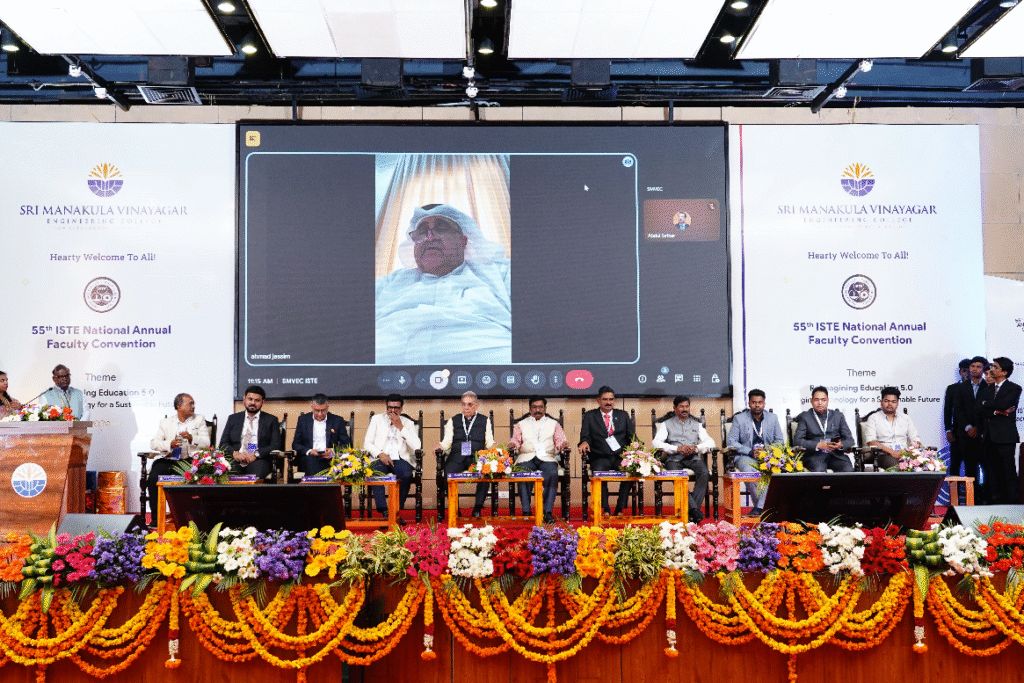
Er. Ahmad Jassim Al Jolo, President, Federation of Global Engineers, Qatar, addressed the gathering online with an insightful and forward-looking message. He emphasized that a strong educational system does more than disseminate knowledge—it nurtures creativity, critical thinking, and real-world problem-solving abilities. Highlighting engineering as one of the finest expressions of human creativity, he noted how engineers design and build systems, structures, technologies, and medical innovations that form the backbone of modern civilization. He reflected on the rapidly evolving technological landscape driven by artificial intelligence, robotics, renewable energy, and advanced digital communication, stressing that such progress continuously reshapes how we live, learn, and work.
He underlined that technology acts as a catalyst for societal transformation, unlocking new possibilities while demanding a workforce capable of adapting, innovating, and learning continuously. He urged that education must evolve in tandem—preparing students not only with knowledge but with the skills to collaborate, create, and thrive in a fast-changing world. Concluding his address, he reaffirmed that the future belongs to those who embrace change with confidence and responsibility, and called for collective commitment to strengthening education, advancing engineering, and using technology wisely to build a smarter and more sustainable world. He extended best wishes for the success of the two-day conference.
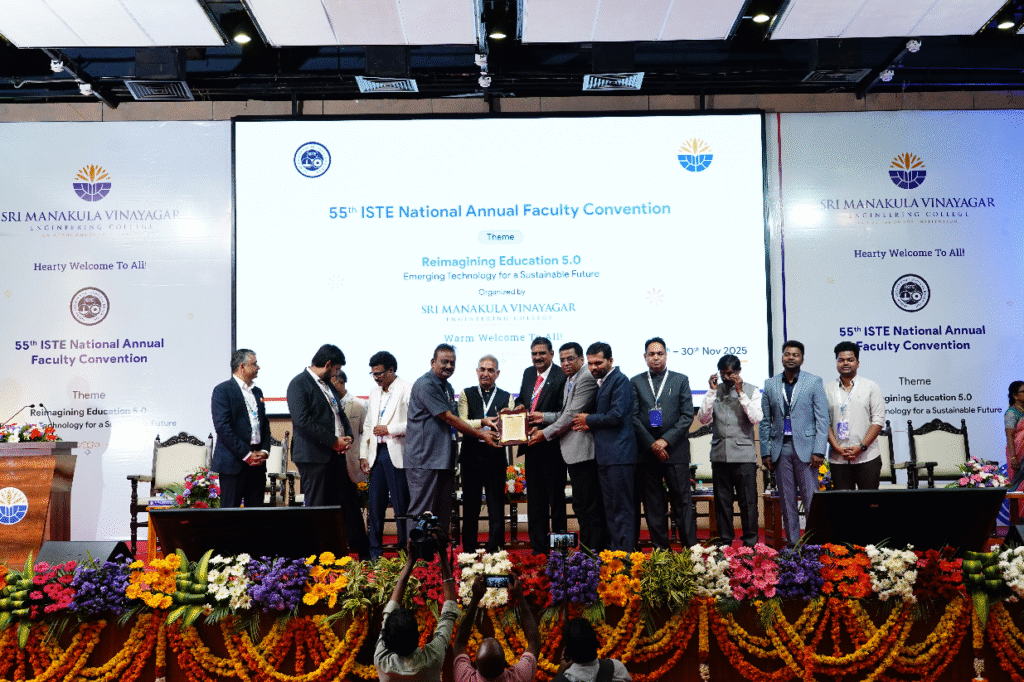
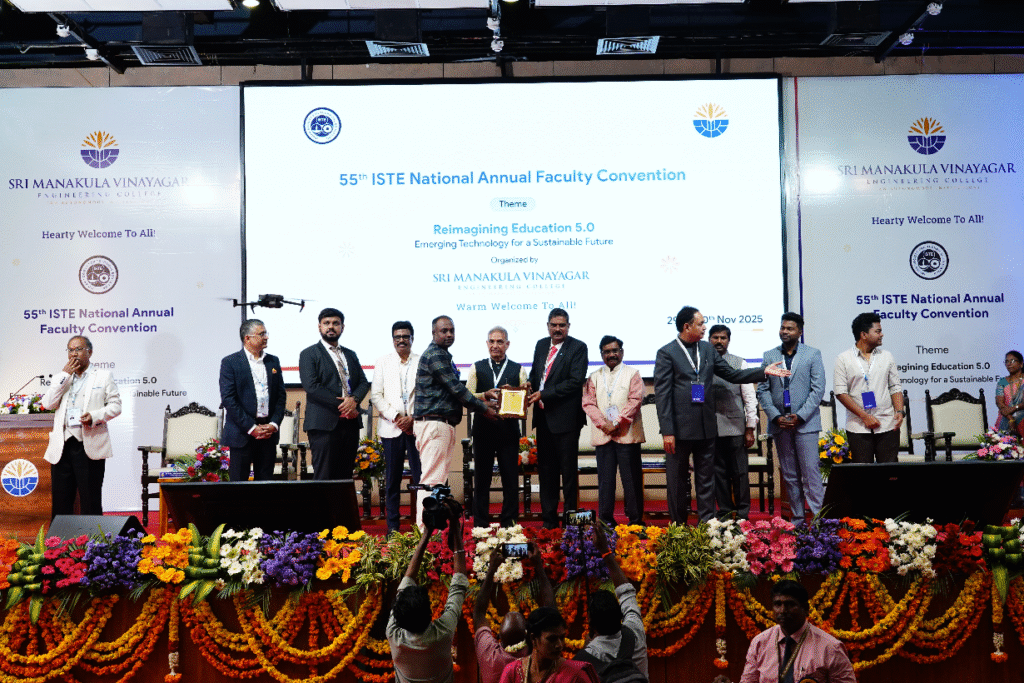
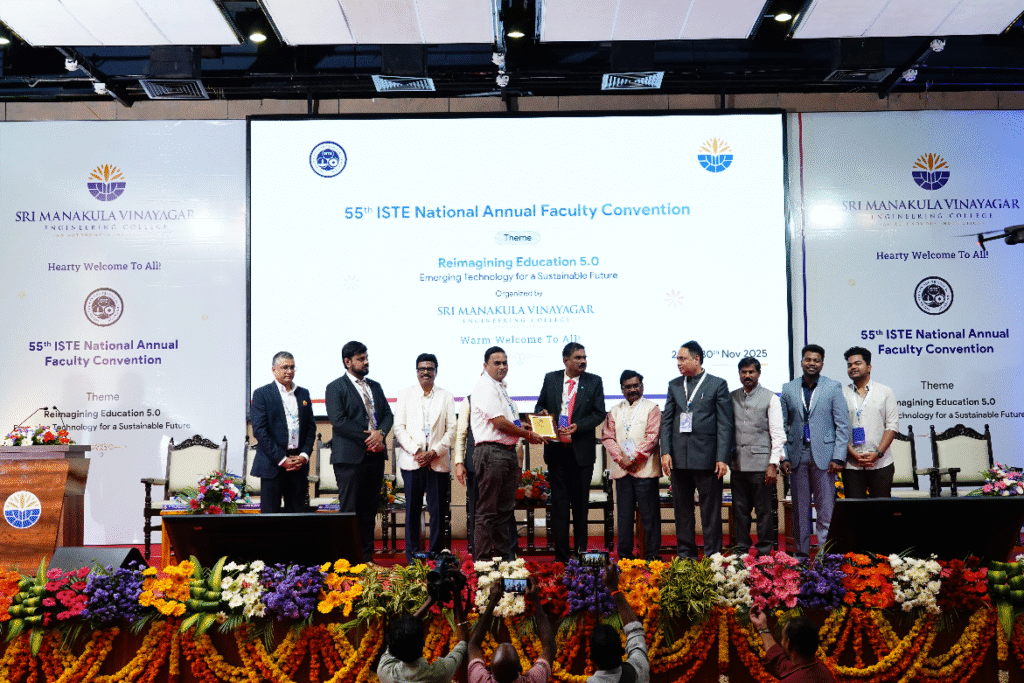
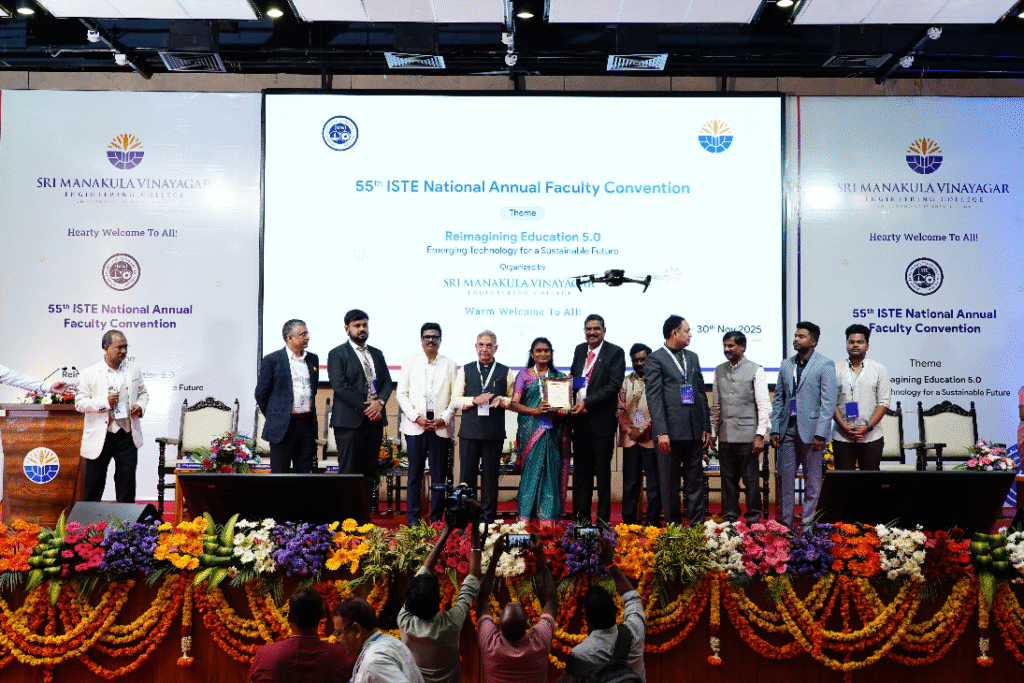
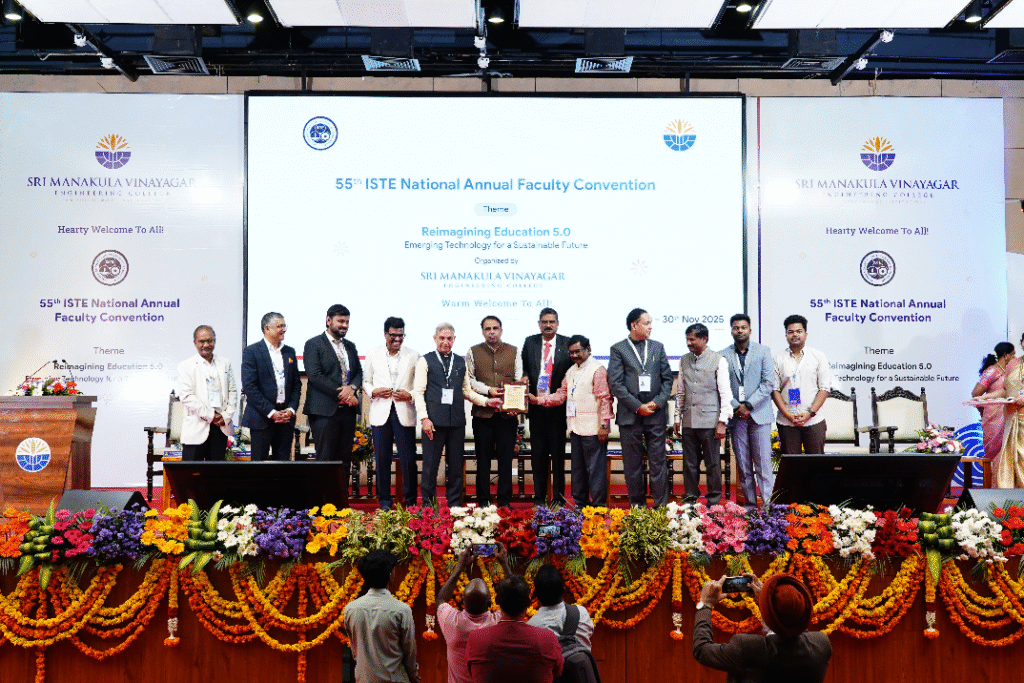
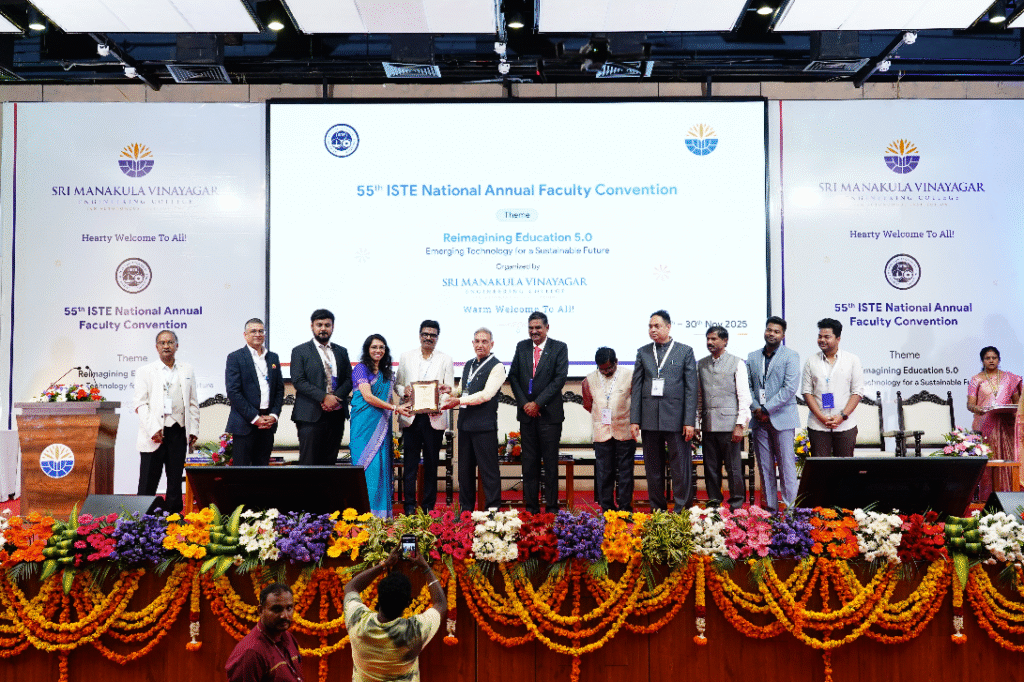
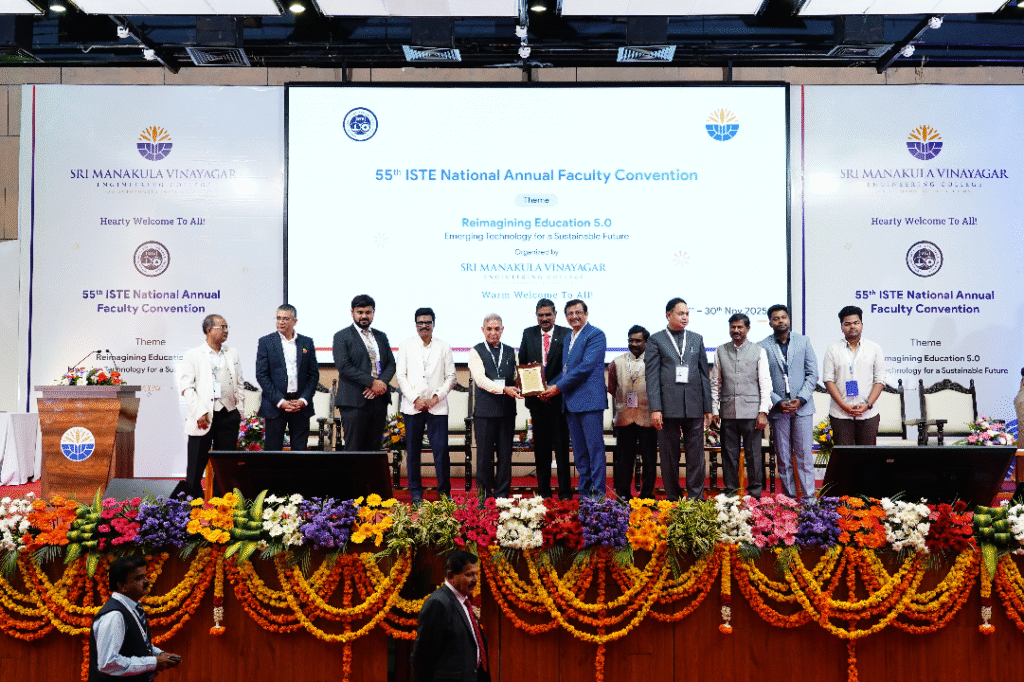
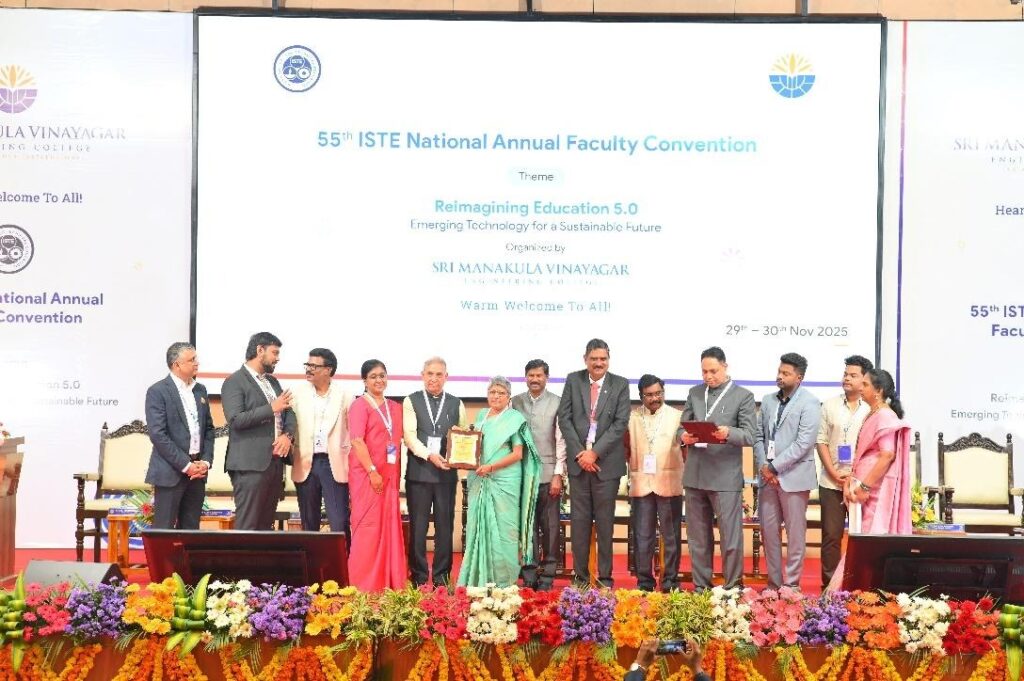
Award Presentation Phase I: ISTE Fellowship & ISTE Premiere
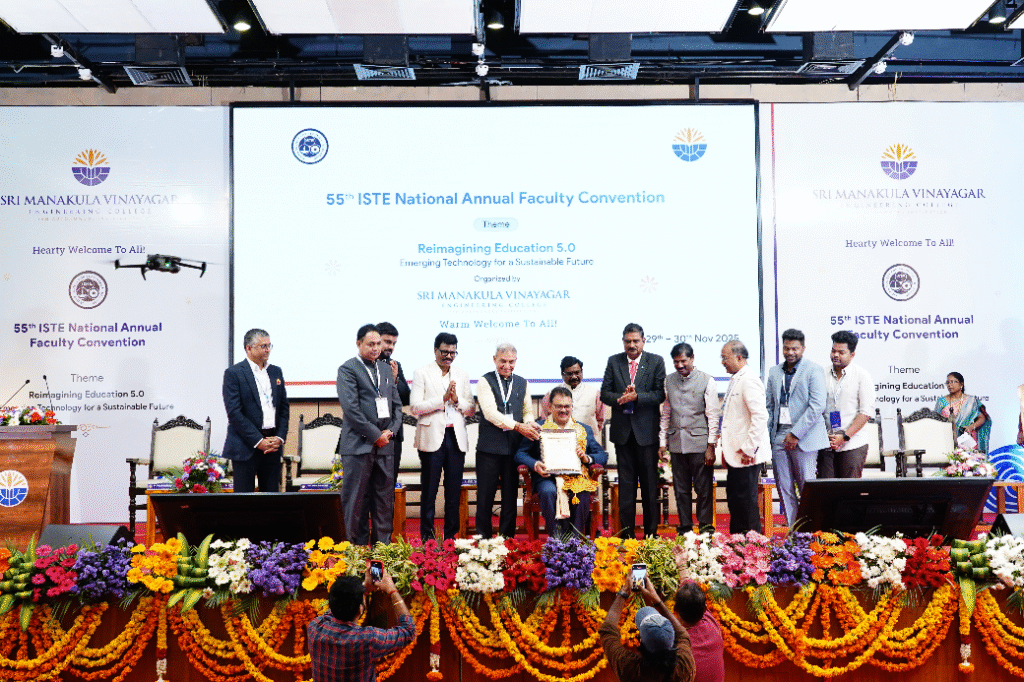
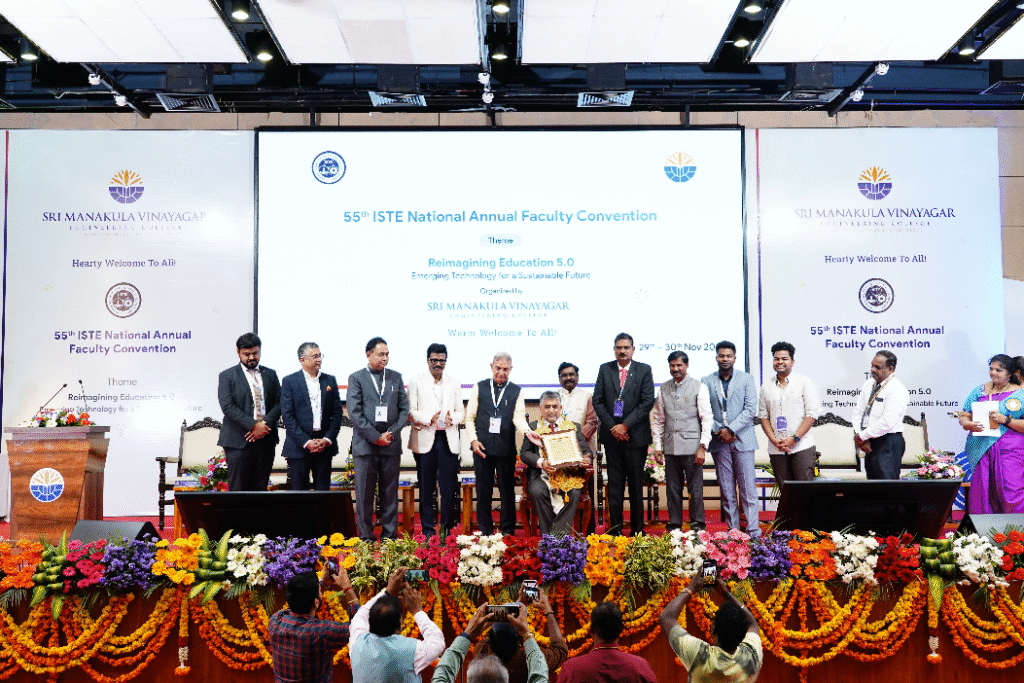


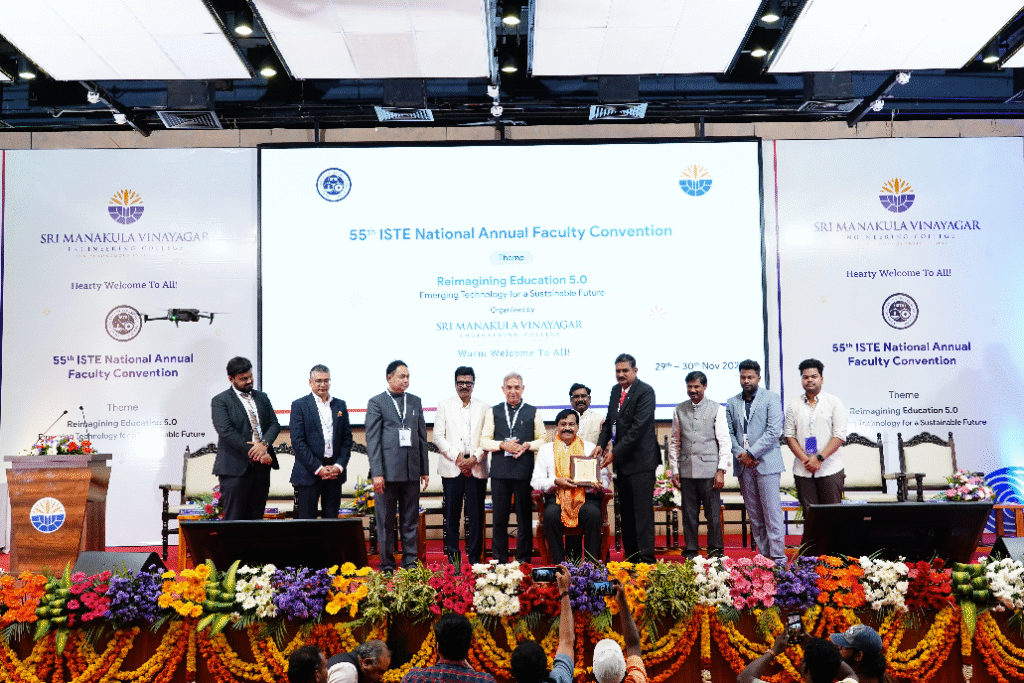

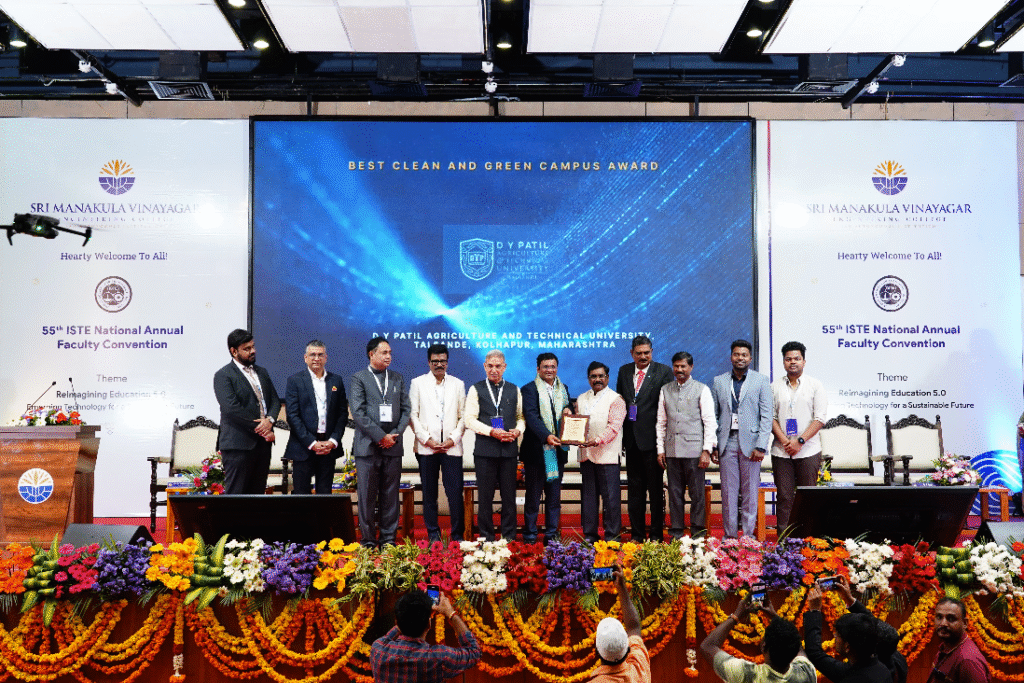
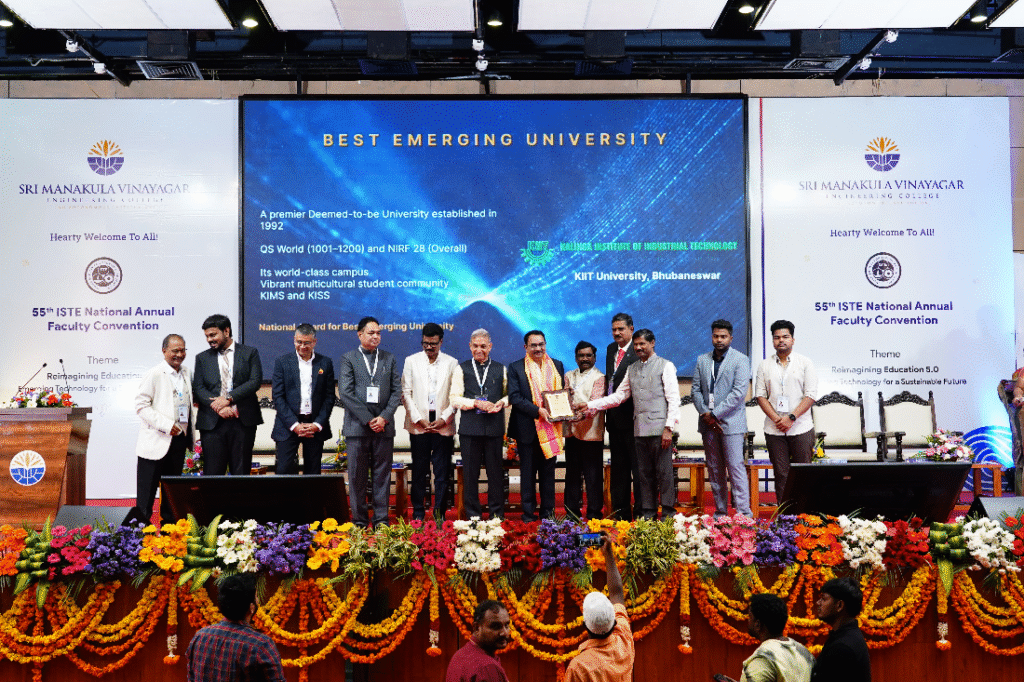
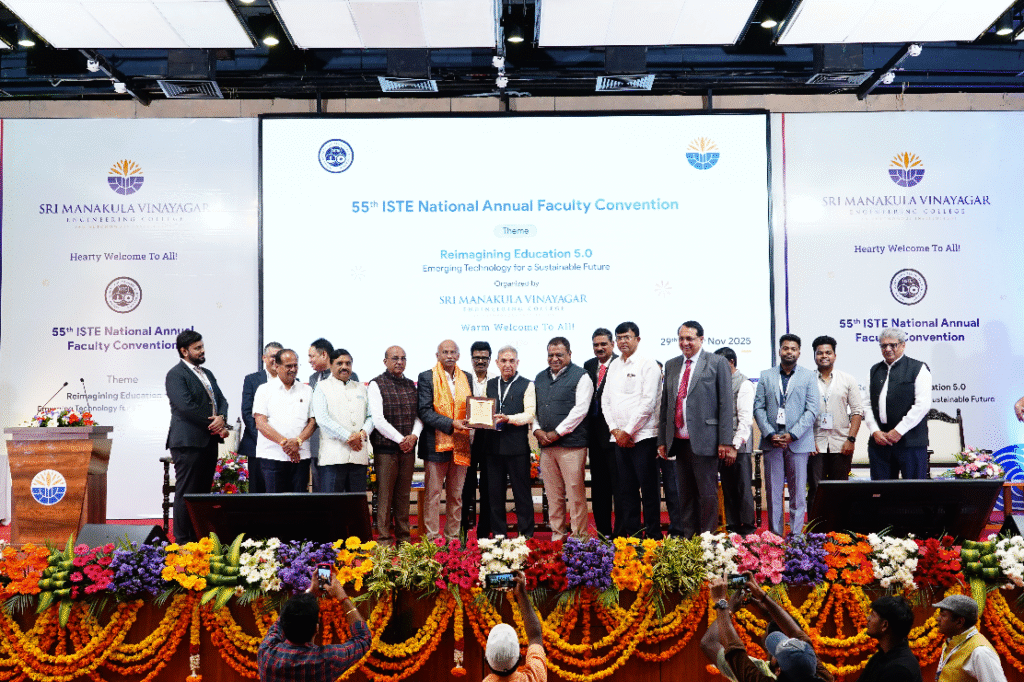
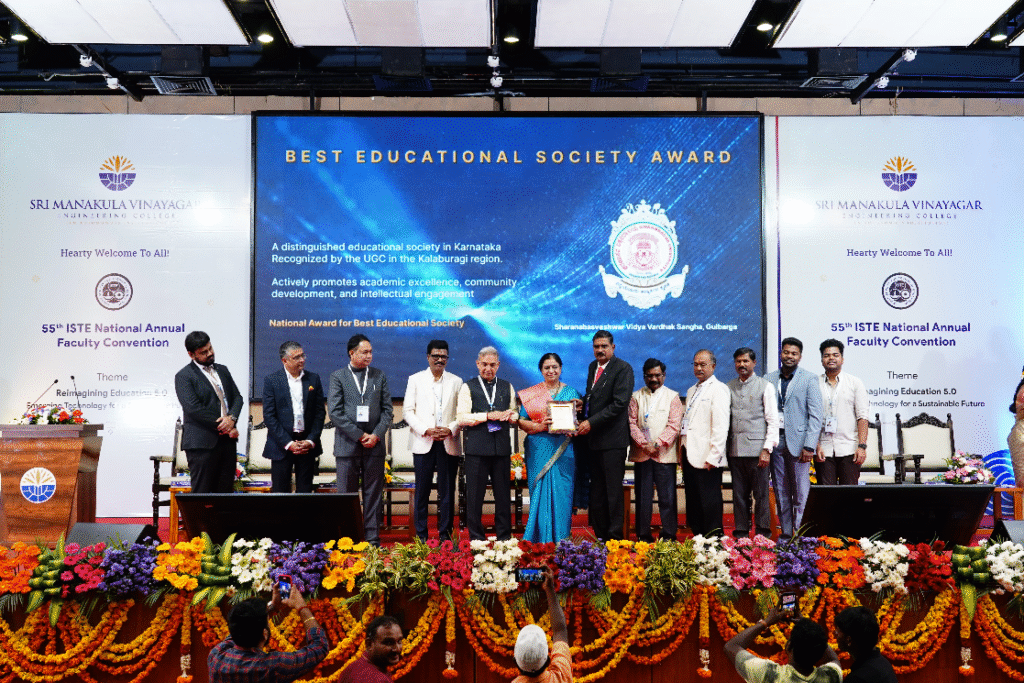
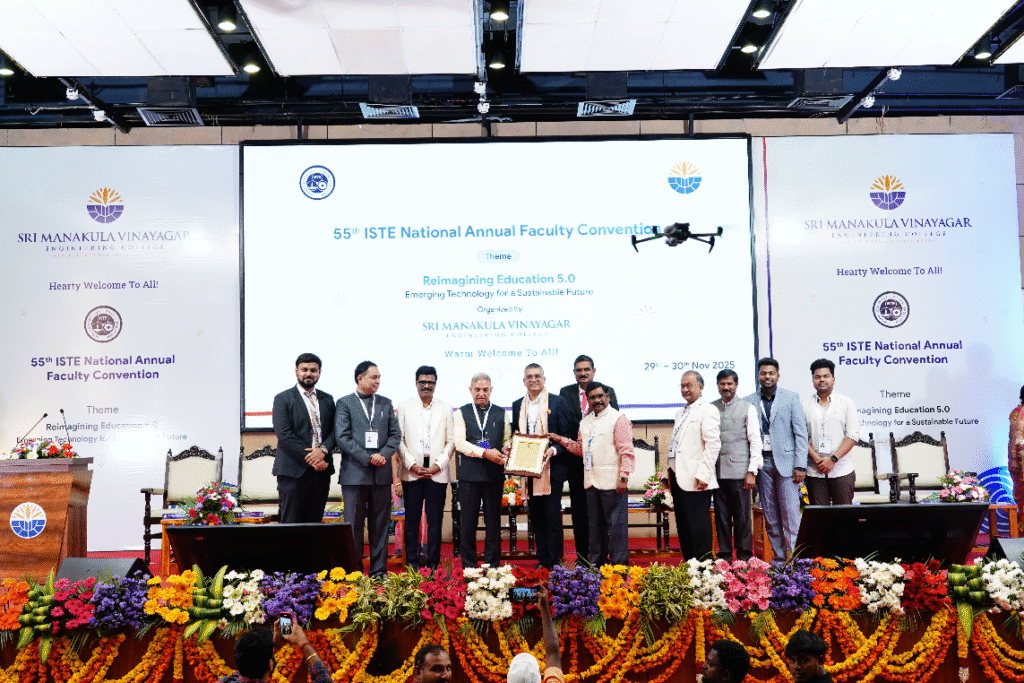
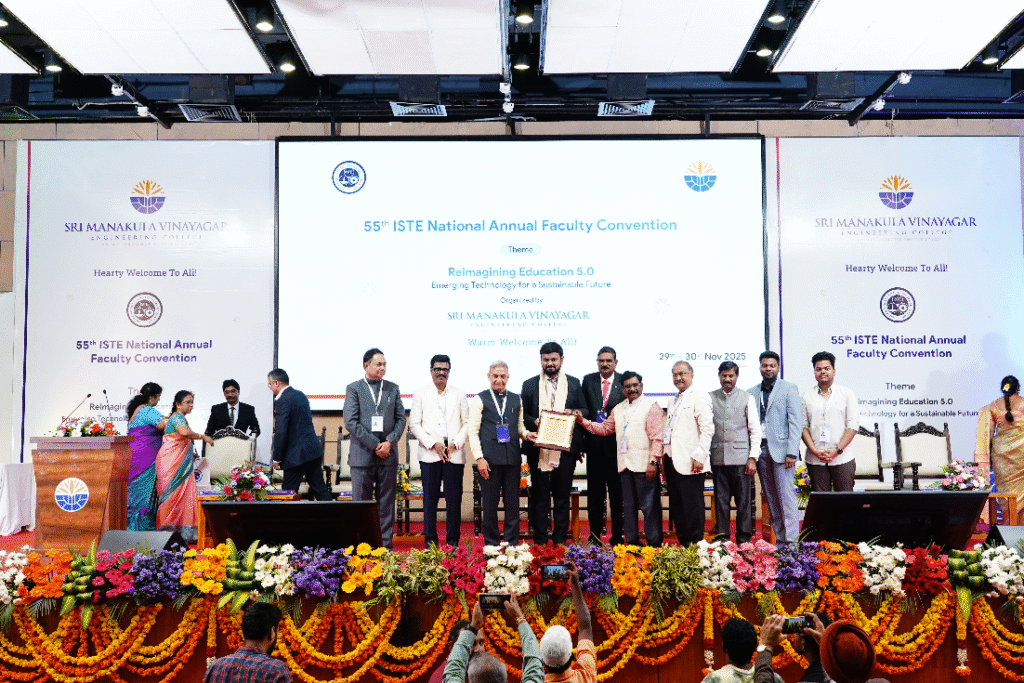
The Award Presentation Phase I honoured distinguished educators with the ISTE Fellowship and ISTE Premiere Awards, celebrating their exceptional contributions to engineering education, research, and academic leadership. The session set an inspiring tone for the convention by recognising excellence and dedication within the ISTE community.
Inaugural Address
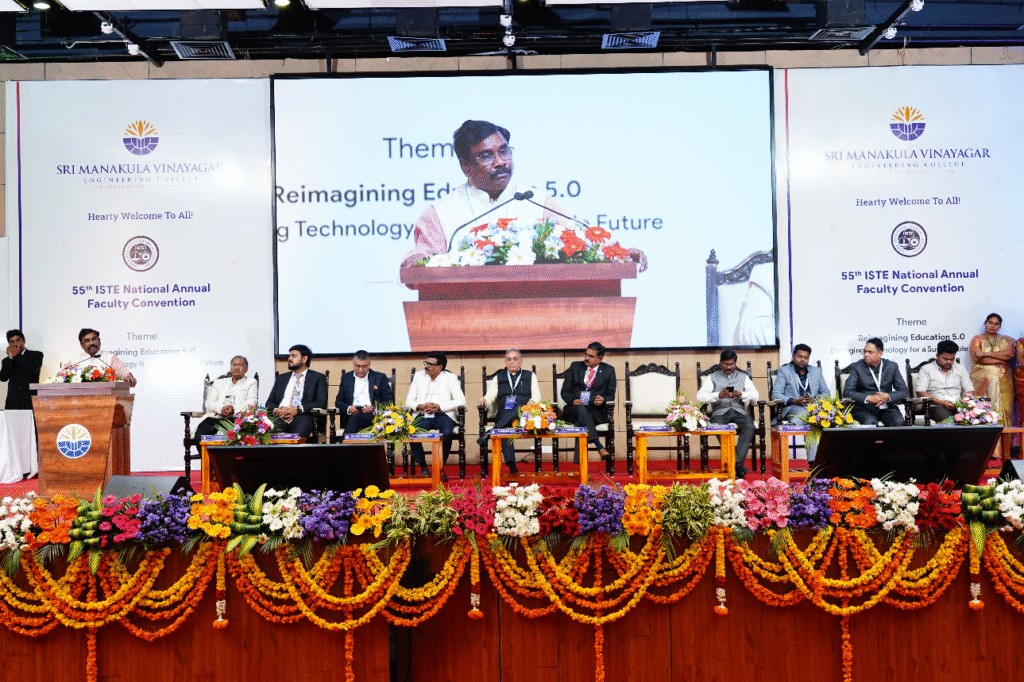
Prof. Prakash Babu, Vice Chancellor of Pondicherry University, delivered an insightful and inspiring inaugural address, highlighting the significance of the 55th ISTE National Annual Faculty Convention and its theme, “Reimagining Education 5.0: Emerging Technology for a Sustainable Future.” He emphasized the urgent need to transform education through creativity, adaptability, ethical technology use, and global competence. Stressing the role of emerging technologies—AI, IoT, robotics, AR/VR, and data analytics—he underlined their importance in enriching pedagogy and preparing learners for complex future challenges.
He praised ISTE for its global leadership in advancing innovative, technology-integrated education and aligning with the NEP 2020 vision. He spoke about redesigning 21st-century curricula by integrating STEM with humanities, fostering critical thinking, empathy, and ethical values. Through real examples, he illustrated how technology must serve real human needs and societal development. Highlighting the importance of experiential learning, micro-credentials, interdisciplinary education, and human values in the AI era, he reiterated that Education 5.0 is about humanity at its core. He also appreciated Puducherry’s rich educational ecosystem and encouraged delegates to visit Pondicherry University, showcasing its multidisciplinary strengths and community-oriented initiatives. Concluding his address, he congratulated the organizers, particularly Shri M. Dhanasekaran sir, for his visionary leadership, conveyed birthday wishes to his Son, and commended ISTE for hosting a meaningful and impactful convention.
Chief Guest Address
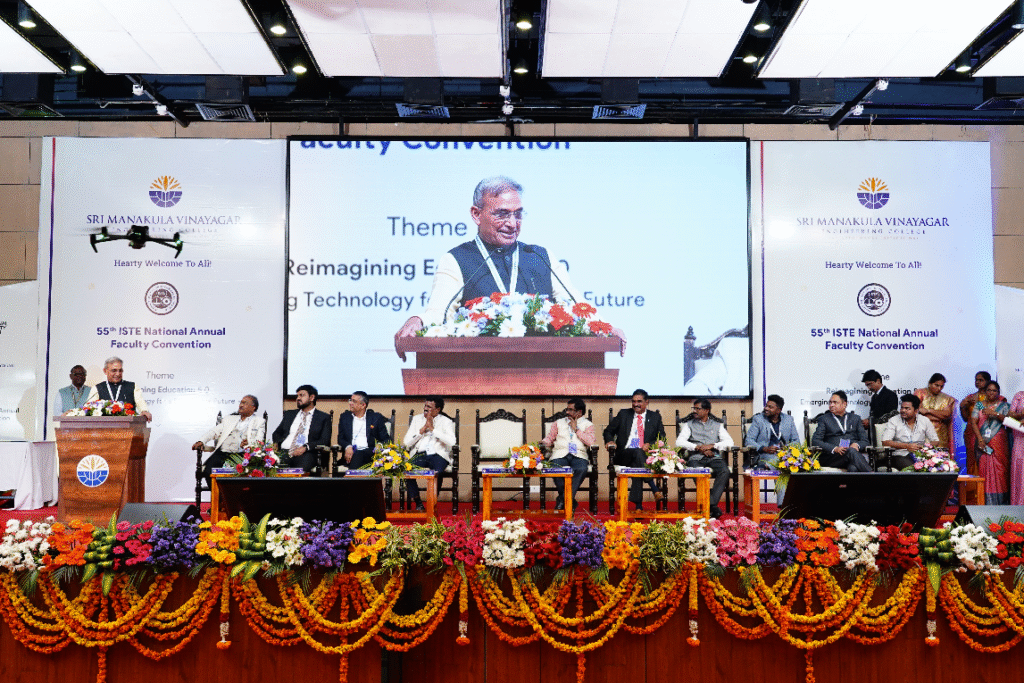
Dr. Satya Pal Singh, Former Union Minister and Former Commissioner of Police, Mumbai, delivered a deeply thought-provoking Chief Guest Address that blended spirituality, Indian philosophical wisdom, and the evolving needs of modern technical education. He began his speech with a traditional invocation, followed by heartfelt greetings to all dignitaries, acknowledging the leadership of Dr. Pratapsinh Kakasaheb Desai, President, ISTE, New Delhi and extending special thanks to Shri M. Dhanasekaran sir for hosting the convention and celebrating his birthday. Reflecting on the theme “Re-imagining Education 5.0: Emerging Technologies for a Sustainable Future,” he emphasised the rapid transformation of technology and the urgent need to integrate timeless human values within technical education.
He highlighted the four fundamental purposes of education—imparting knowledge, enabling dignified livelihood, fulfilling aspirations, and earning honour—questioning whether current institutions truly meet these goals. He stressed that engineering, though technologically driven, must align with ethics, responsibility, sustainability, and societal welfare. Drawing from Vedic principles, he reminded that the greatest engineer is the cosmic creator, and modern engineers must emulate this precision, creativity, and purpose. He urged institutions to nurture innovation from early schooling, promote questioning, uphold ethical engineering practices, address societal challenges such as migration, poverty, water scarcity, and environmental degradation, and encourage lifelong learning with the motto “Learn, Unlearn, Relearn.” His address concluded with a powerful call for engineers and educators to build a humane, value-centered, sustainable future for the nation.
Hands Over Lifetime Membership Contribution to ISTE
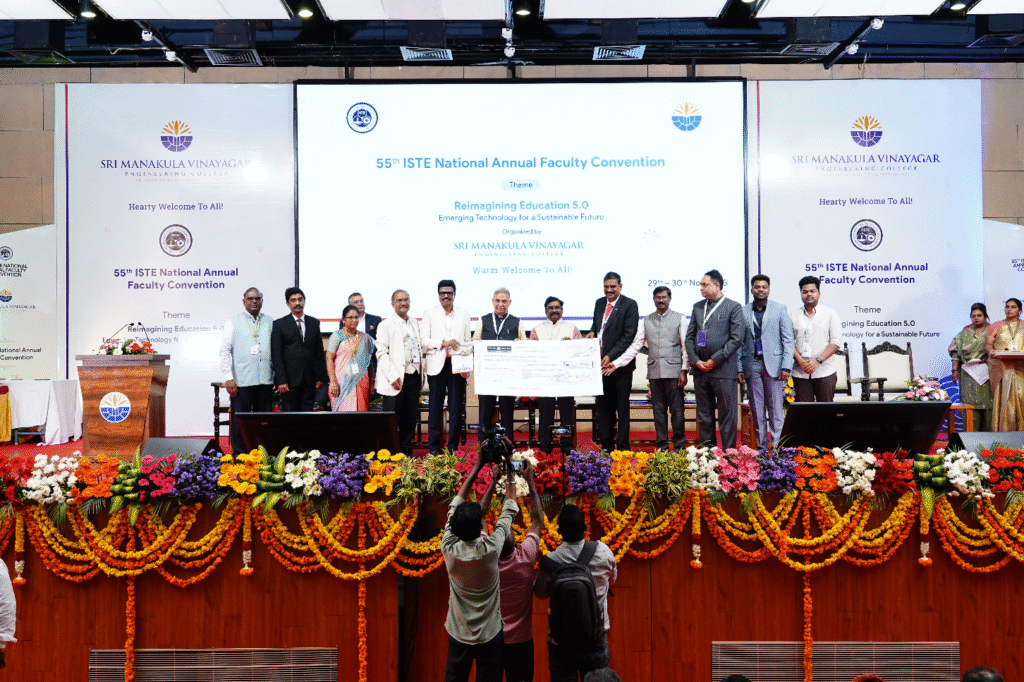
In a significant moment highlighting the institution’s commitment to professional development, SMVET officially handed over the Lifetime Membership contribution to the ISTE President. This contribution represents the enrolment of 3,070 students and 400 faculty members from SMVET as Lifetime Members of the Indian Society for Technical Education (ISTE).
Launch of ISTE Proceedings
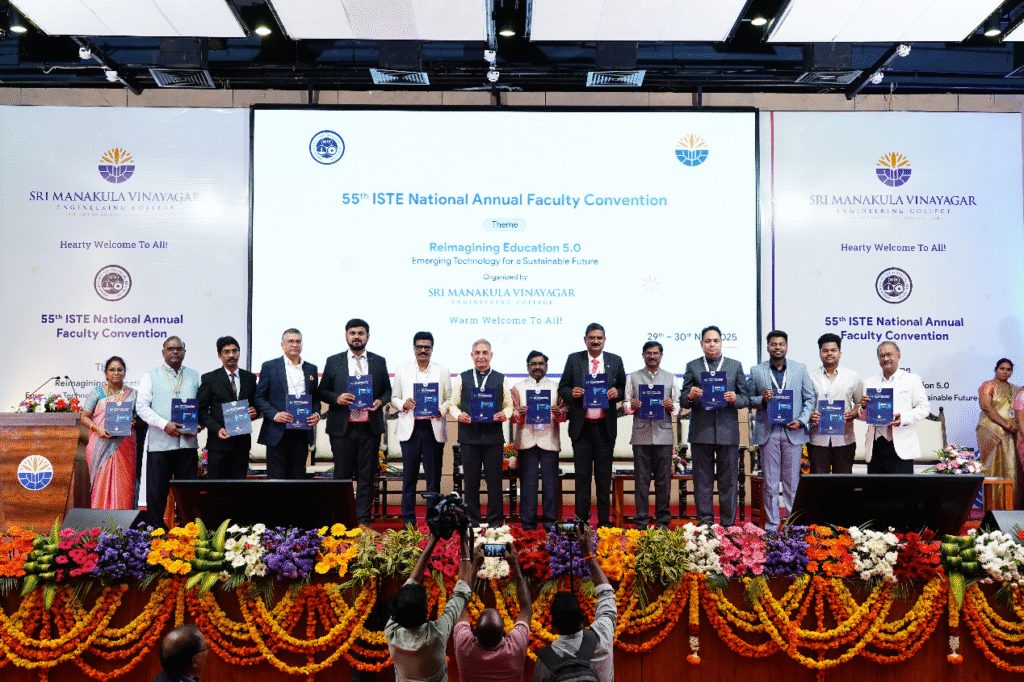
A key highlight of the 55th ISTE National Annual Faculty Convention was the official launch of the ISTE Proceedings, marking an important step in documenting and disseminating scholarly contributions from educators, researchers and technologists across the country.
The formal release of the proceedings symbolised the collective academic effort invested in advancing engineering education, showcasing high-quality research papers, innovative practices, and emerging technological insights aligned with the theme “Re-imagining Education 5.0: Emerging Technologies for a Sustainable Future.”
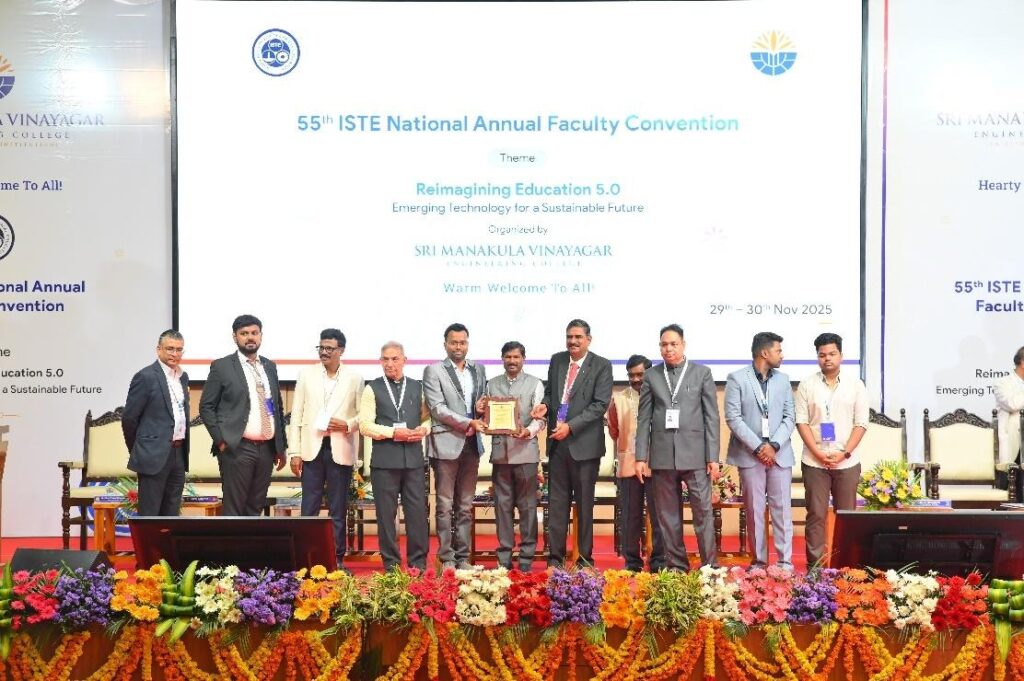
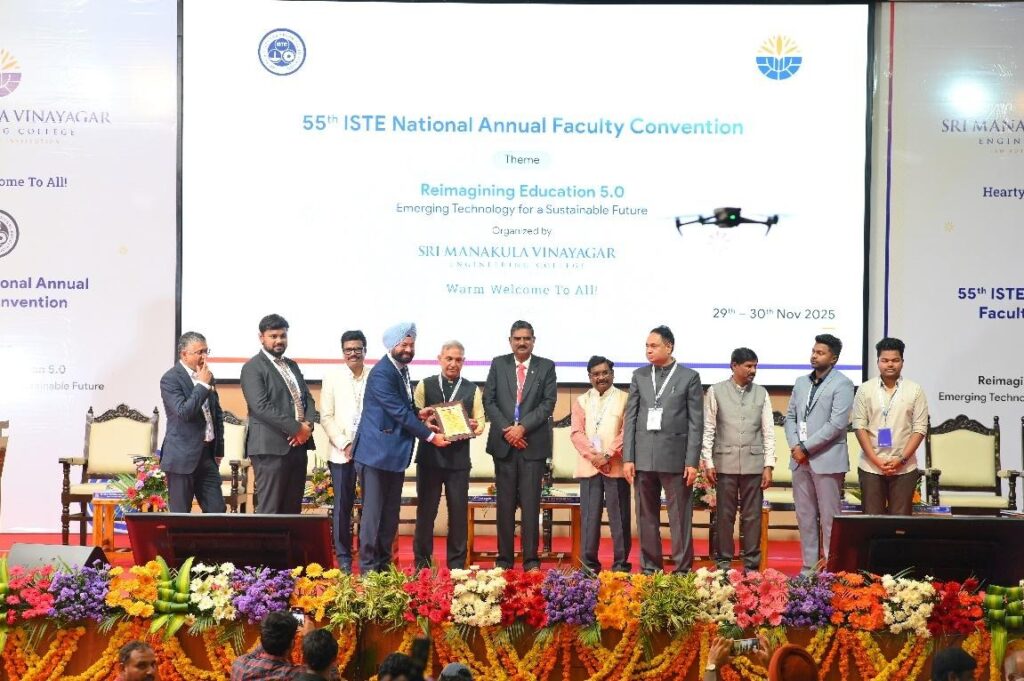
Award Presentation Phase II

Vote of Thanks
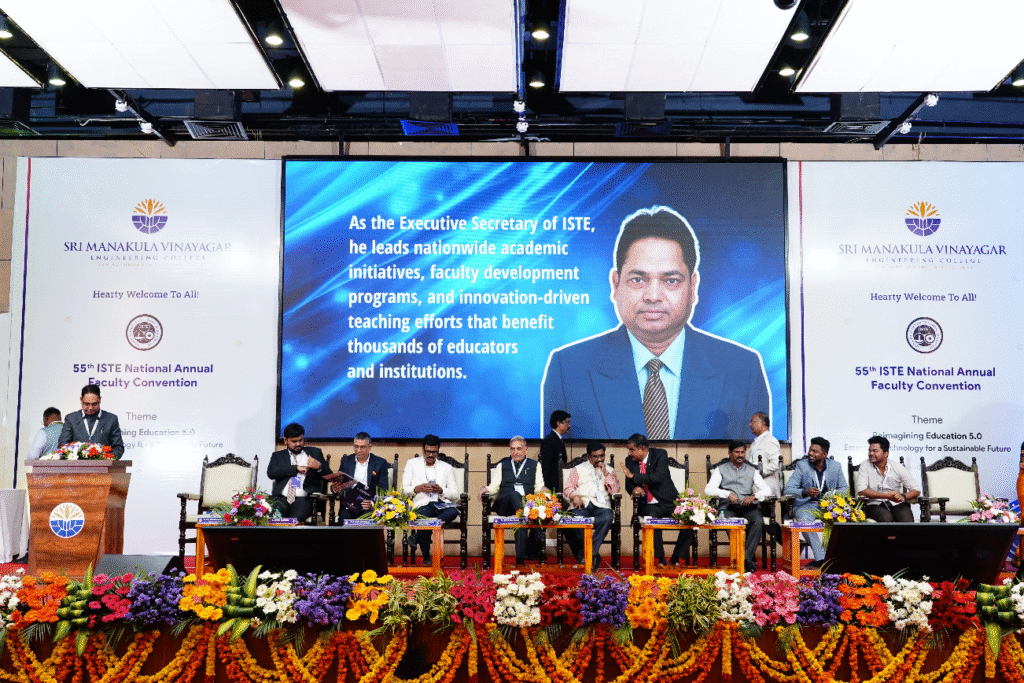
Dr. S. M. Ali, Executive Secretary of ISTE, delivered the Vote of Thanks with great appreciation, expressing his gratitude to all dignitaries, chief guests, speakers, delegates, and participants for their valuable presence and contributions to the 55th ISTE National Annual Faculty Convention. He acknowledged the remarkable support and hospitality extended by SMVET and SMVEC management, along with the dedicated efforts of the organising committee, faculty coordinators, and student volunteers. Dr. Ali concluded by reaffirming ISTE’s continued commitment to strengthening technical education and thanked everyone for making the inaugural ceremony a memorable and successful event.
Day 2 Highlights: Paper Presentation Sessions
Day 2 of the 55th ISTE National Annual Faculty Convention featured a dynamic and intellectually stimulating Paper Presentation Session, where researchers, faculty members, and scholars from institutions across the country showcased their innovative work. The sessions highlighted diverse themes aligned with the convention’s focus on “Re-imagining Education 5.0: Emerging Technologies for a Sustainable Future.”
Panel 1: Innovations in AI, IoT, AR/VR & Education 5.0 – Paper Presentations
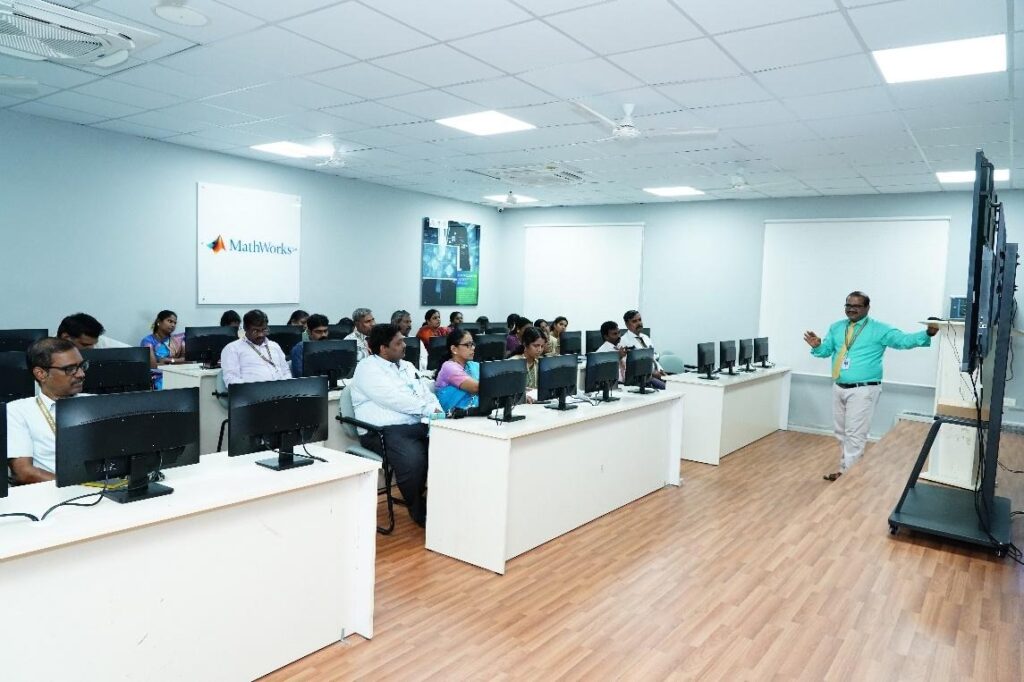
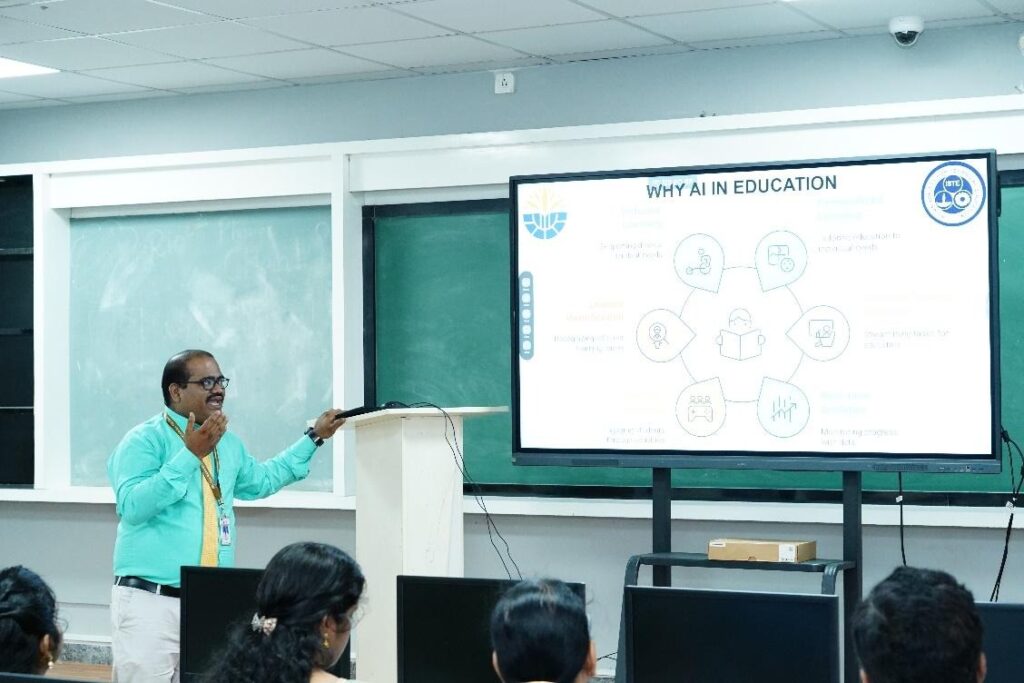
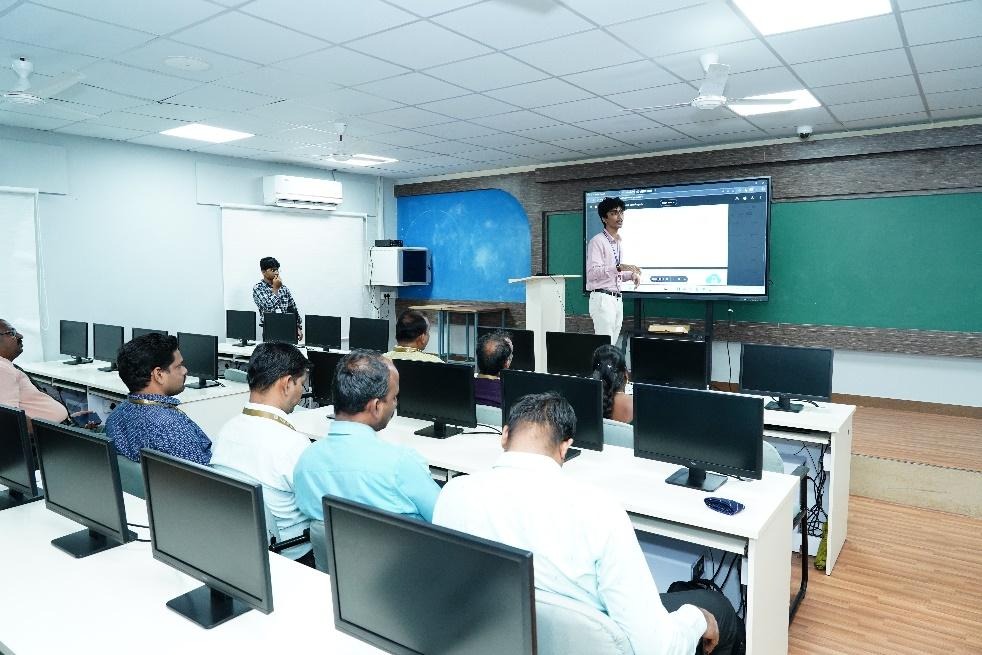
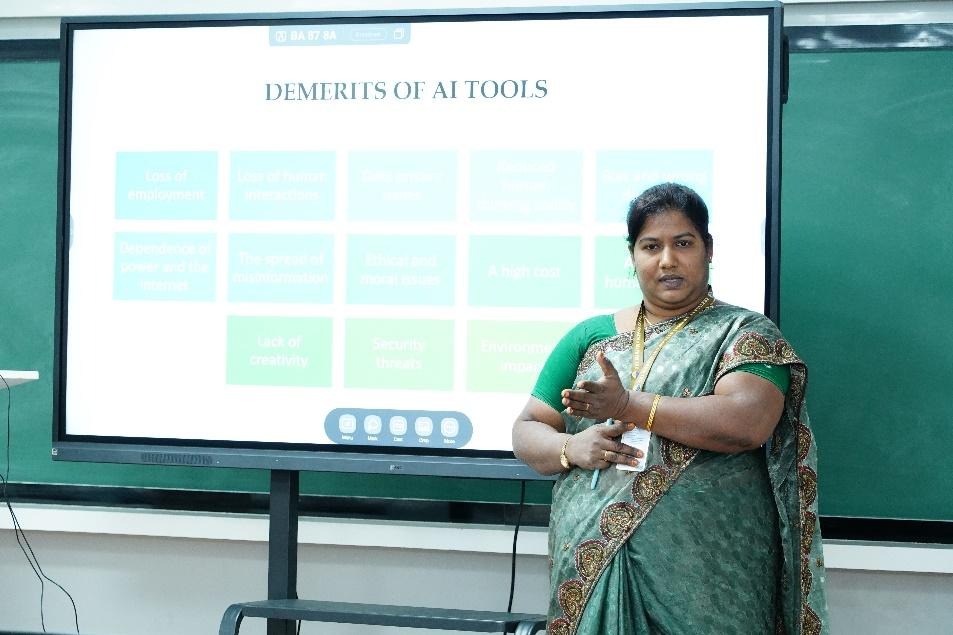
Panel 1 of the Paper Presentation Session showcased 15 impactful research works centered on emerging technologies such as Artificial Intelligence, Blockchain, IoT, AR/VR, Deep Learning, Smart Education Systems, and sustainable learning architectures. Researchers and faculty members some institutions presented cutting-edge concepts aligned with the convention theme “Re-imagining Education 5.0.”
The session featured diverse and forward-thinking papers, including:
- Smart Identity Validator using AI for preventing fake social profiles
- Generative AI Frameworks for immersive and ethical learning
- Blockchain-secured multimodal data extraction models
- AI-enhanced AR-based attendance validation systems
- EEG–MRI diagnostic models integrating wavelet and deep learning
- IoT-driven mobile internet optimization using swarm algorithms
- AI-powered adaptive learning and recommendation engines
- AR/VR-based assistive learning for students with disabilities
- AI–IoT–AR/VR integrated skill-based learning ecosystems
- Speaker verification systems for education security
- AI-powered academic platforms for Education 5.0
- Insights into enabling technologies for the quantum shift in education
- AI-integrated smart academic companions for personalized learning
- Energy-aware SDN orchestration frameworks for smart campuses
- Smart learning architectures for future-ready educational systems
Panel 2 – Breakthrough Innovations in Mechanical, Civil & VLSI Engineering
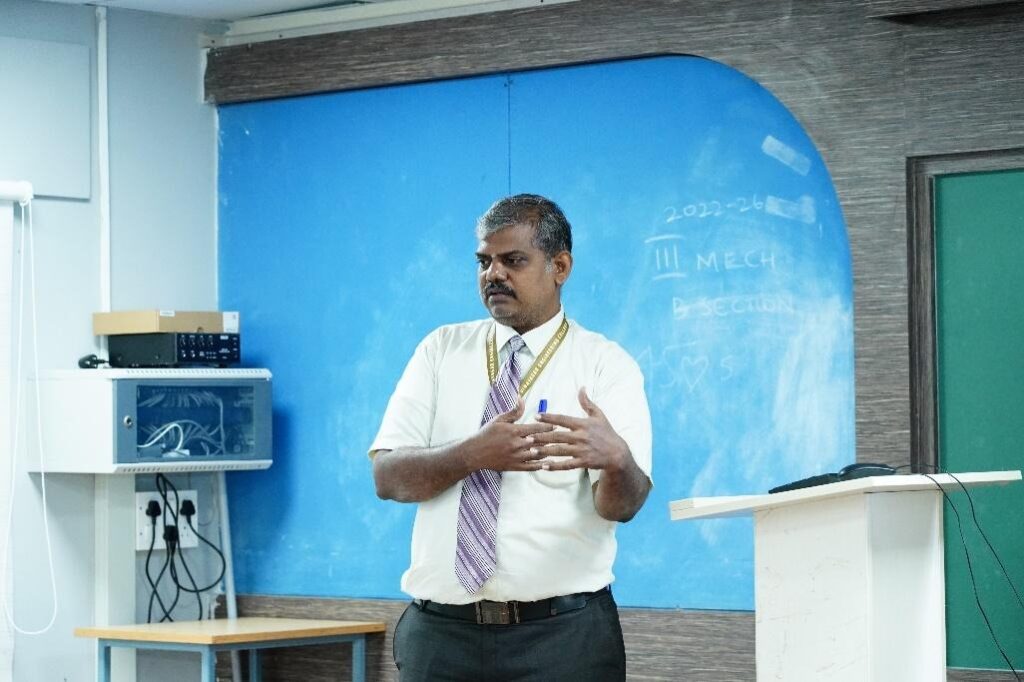
Panel 2 featured 13 diverse and impactful research presentations focused on sustainability, advanced materials, thermal systems, automation, and next-generation education technologies. The key paper titles presented in this panel are:
Mechanical Engineering & CCE – Presented Papers
- Review on Materials, Process and Properties of 3D Printed Polymers for Engineering Application
- Numerical and Experimental Thermal Analysis of a Forced-Convection Solar Air-Drying System
- Impact of AI Usage on Technostress, Workload & Emotional Intelligence Among Engineering Academic Staff – Mixed Methods Study
- Desirability-Based Multi-Response Optimisation of Al6063/Al₂O₃ Metal Matrix Composites
- Integrating SDG Indicators into Mechanical Engineering Innovation for Sustainable Industrial Development
- Automated Robotic Material Transport System
- Integrating Nanofluid Heat-Transfer Experiments for Sustainable Engineering
- Thermochemical Conversion of Millingtonia Hortensis – Influence of Particle Size on Bio-Oil Quality
- Reimagining Education 5.0 Through Sustainable Home Automation – Smart Dishwashing Systems
- AI-Driven Multi-Objective Optimization of Biodiesel-Fueled CI Engines Using IoT Data Acquisition
- Nanofluid-Assisted Microchannel Heat Sinks for High-Performance Thermal Systems
- Investigation of Polyester-Based Nanocomposite for Tribological Applications
- Education 5.0 Meets Emerging VLSI Technology – Sustainability-Driven Study of Polar Decoder-Based Full Adders
Panel 3 – Advancements in Electronics, AI Ethics, and Future-Ready Education Models
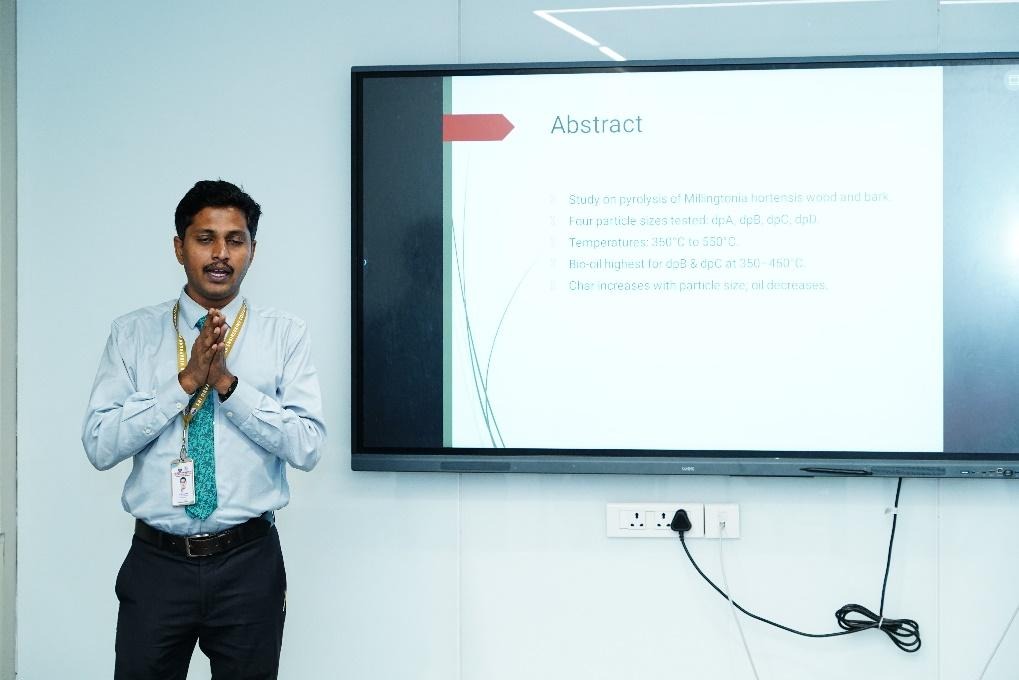
Panel 3 showcased 14 impactful research papers from ECE and allied domains, highlighting breakthroughs in power systems, biosensing, AI ethics, cybersecurity, emerging learning paradigms, and Education 5.0 technologies. The session reflected a strong blend of engineering innovation and educational transformation.
Presented Topics – Panel 3
- Detection and Classification of Power Quality Disturbances Using DWT–LSTM Model
- Comparative Analysis of Silicon Nanowire FET and Carbon Nanotube FET for Biosensing Applications
- Ethical Considerations in AI-Enhanced Education: Balancing Innovation and Responsibility
- Literature Survey on Security & Ethics in AI Applications for Teaching–Learning Processes
- Integrating Emerging Technologies into Teaching–Learning for Enhanced Outcomes
- Emerging Learning Paradigms to Cultivate Creative, Critical Thinking and Collaboration
- Ethical AI Frameworks Connecting Educators, Researchers, and Industry Partners
- EduConnect 5.0 – A Digital Platform for Multi-Stakeholder Collaboration
- Cybersecurity and Ethical AI Practices for Safe and Responsible Digital Learning in Education 5.0
- Embedding Sustainability and Wellbeing in Future-Ready Education Models – Dr. V. Sugasini, SMVEC
- Human-Centric Interdisciplinary Learning Ecosystem Enabled by Emerging Technologies
- Education 5.0 Transformation via AI and Robotics for Critical-Thinking-Driven Learning
- Hybrid Learning Ecosystems in Indian Higher Education: Implementation Framework
- Integrating AI and IoT in Classroom Teaching – Practical Approaches and Outcomes
Panel 4 – AI Innovations, Smart Learning Systems & Digital Transformation for Education 5.0
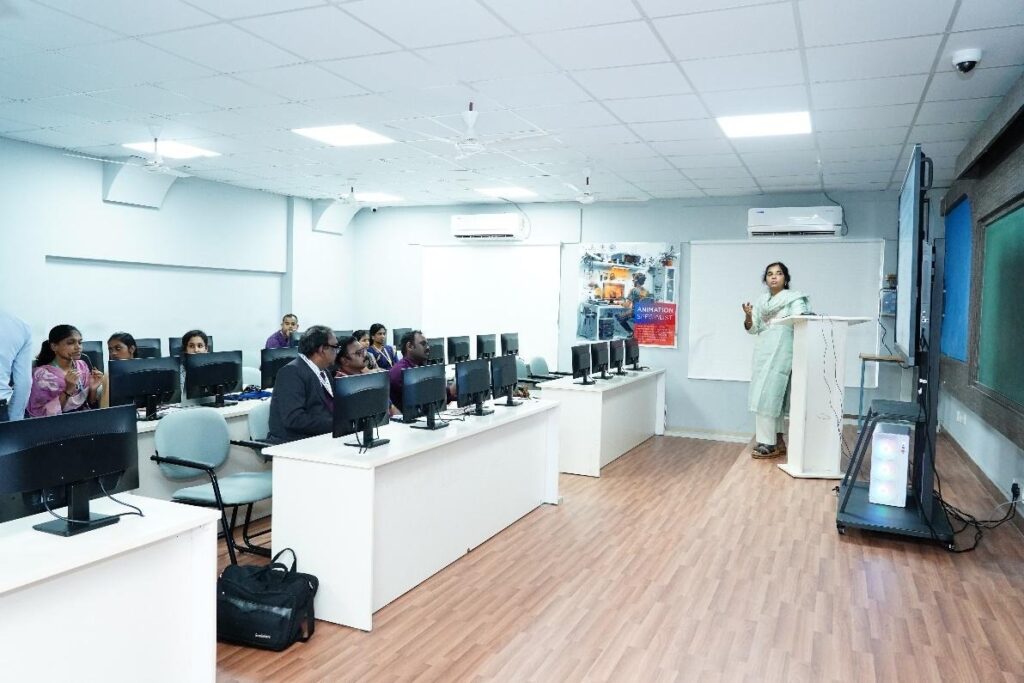
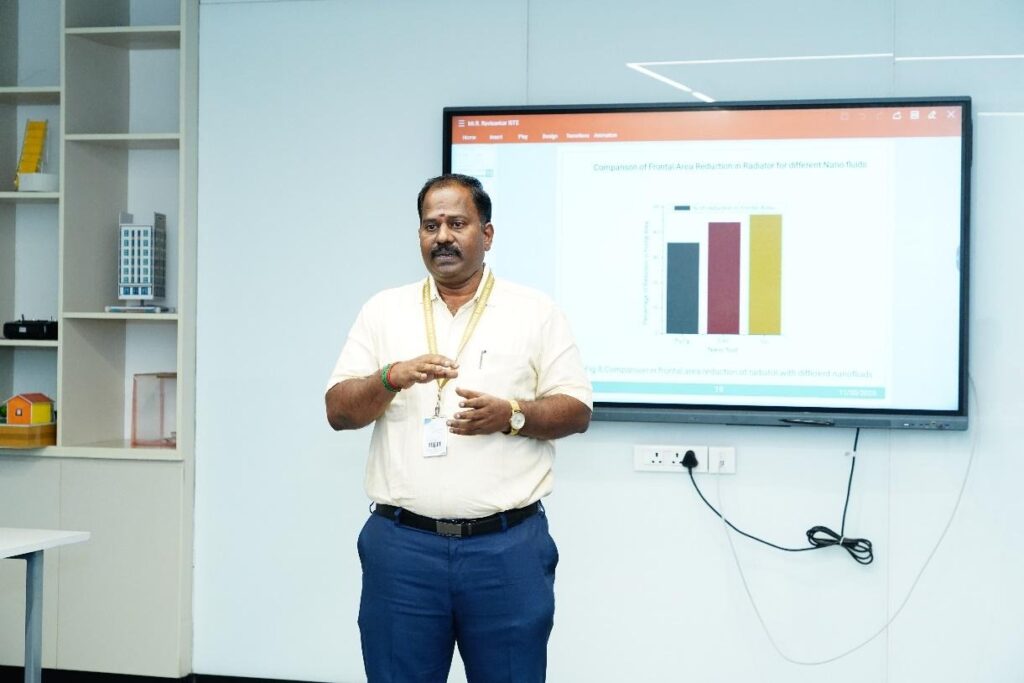
Panel 4 brought together 14 impactful research presentations centered on Artificial Intelligence, IoT, blockchain, smart surveillance, healthcare diagnostics, and emerging educational technologies. The panel strongly reflected how AI-driven systems and digital innovation are reshaping Education 5.0, sustainable learning practices, and human-centric technological development.
Presented Topics – Panel 4
- Smart Laboratory Safety Compliance Monitoring Using YOLOv10s for Education 5.0
- EduGuard-AI: Real-Time Multi-Modal Surveillance System for Intelligent Classroom Monitoring
- Enhanced IoT-Based Offline Attendance System Using RFID and Retina Authentication
- AI-Powered Personalized Learning Pathways for SDGs – A Machine Learning Framework
- BookIQ: AI-Based Book Recommendation & Peer-to-Peer Trading Platform for Academic Communities
- Lightweight Deep Learning Architecture for Diabetic Retinopathy Diagnosis
- Blockchain & Decentralized Credentialing for Global Lifelong Learning
- AI Automatic Face Attendance System for Special Students
- Interview Coach – AI-Based Communication Enhancement Tool
- Air Quality Monitoring & Enhancement in Classrooms – Review and System Design
- Education 5.0: Transforming Learning with Emerging Technologies & Sustainable Practices
- Immersive Learning in 2025 – Review of Technology-Integrated Education Models
- Context-Aware Security Using AI – Adaptive Zero Trust Framework for Hybrid Workforce
- VITALSAGE: Real-Time Inactivity Risk Prediction for Dementia Care Using Wearables & Edge ML
Panel 5 – Innovations in Electrical Engineering for Sustainable Energy & Smart Systems
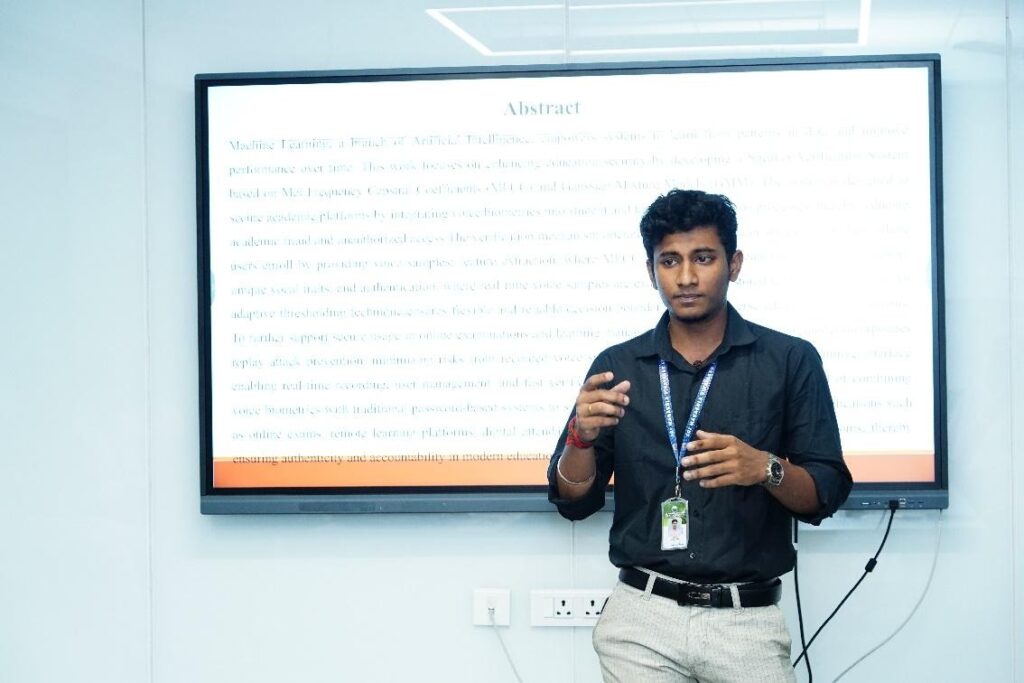
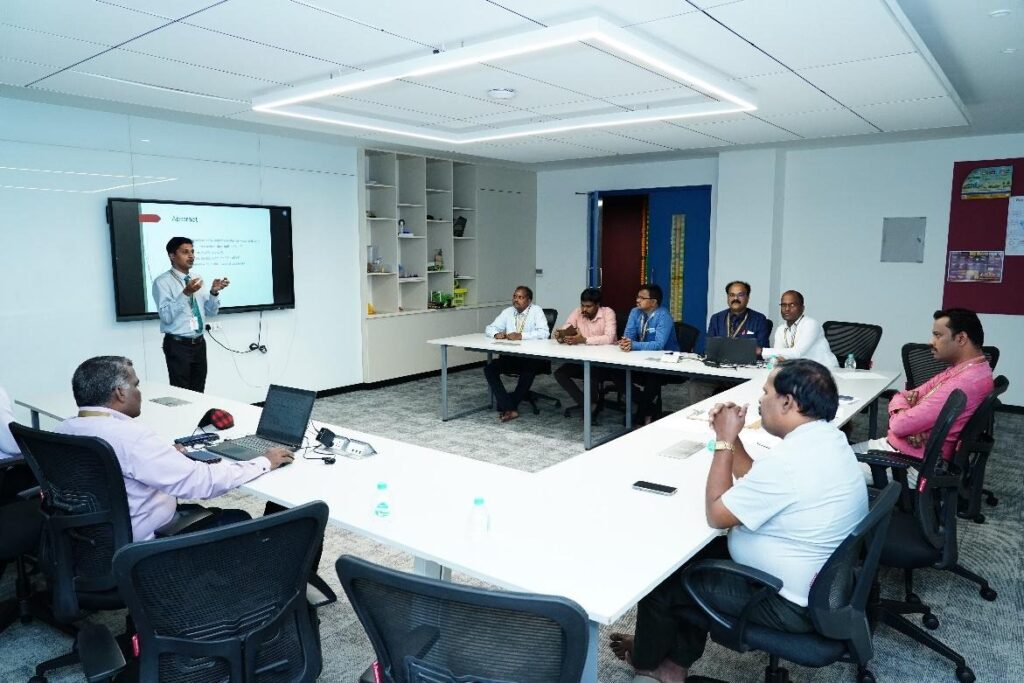
Panel 5 focused on transformative research in Electrical and Electronics Engineering, showcasing technologies that support sustainable energy systems, smart automation, intelligent power electronics, and IoT-driven monitoring solutions. The session highlighted how advanced control strategies, renewable innovations, and AI-based optimization are shaping the next generation of power and smart infrastructure.
Presented Topics – Panel 5
- 2D FEM Analysis of XLPE Insulation for Next-Gen Submarine Power Cables
- Solar Power Generation Forecasting – A Case Study Approach
- Real-Time Asset Monitoring System Using IoT with RFID and GPS
- Real-Time Vehicle Tracking System for State Transport Corporation (Aligned with SDG 11)
- Hybrid Wind Turbine Technology for Sustainable Energy Enhancement
- Upcycling PET & HDPE Waste into 3D Printing Filaments Using IoT-Based Smart Manufacturing
- Efficiency Investigation of Dual-Axis Solar Tracker with Passive Cooling System
- Optimized Carrier-Based PWM Strategies for Reduced-Switch AMI in Sustainable Power Conversion
- Adaptive BLDC Motor Control Using AI-Based Optimization Techniques
- Controller Performance of Energy-Optimal Fed Induction Motor Drive
- Sustainable Energy Source in Grid-Connected Operation
- Energy-Efficient Carrier-Based PWM Control for Reduced-Switch AMI
- Classroom Automation System Using Smartphone
Panel 6 – Leadership, Innovation & AI-Driven Transformation in Education 5.0
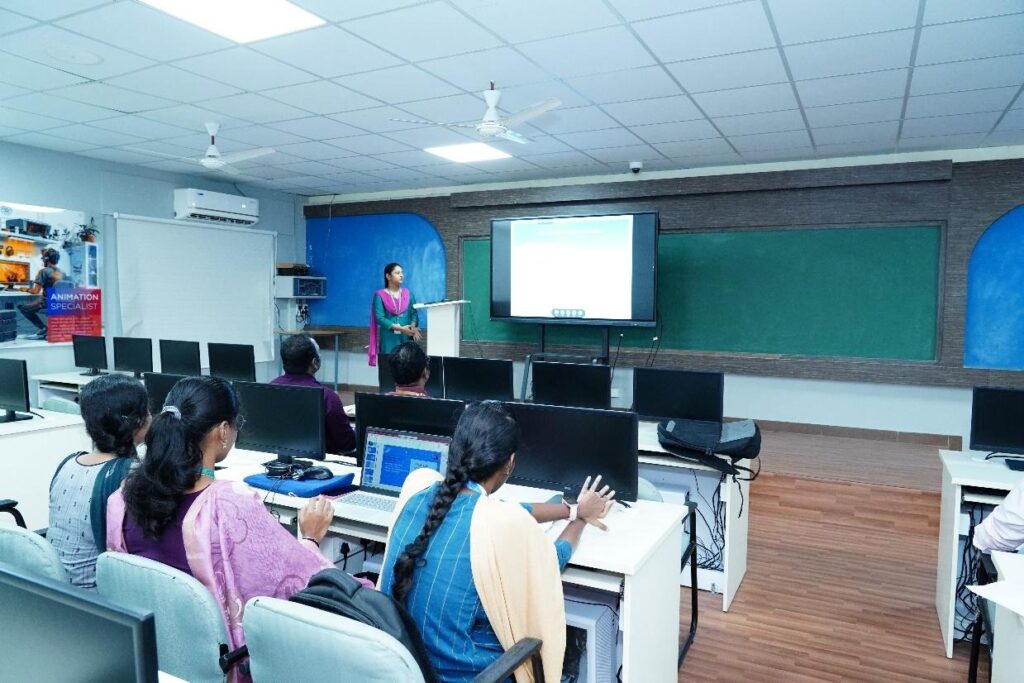
Panel 6 highlighted dynamic research contributions from Management Studies, focusing on the evolving role of leadership, recruitment, and human-centric values in the era of Education 5.0. The presentations explored how AI, emotional intelligence, digital leadership, sustainability, and cybersecurity are reshaping modern educational ecosystems. The session emphasized the need for ethical, inclusive, and tech-empowered approaches to prepare future-ready institutions.
Presented Topics – Panel 6
- A Comprehensive Study of Recruitment & Selection Strategies in Fifth-Generation Educational Institutes (FGEIs)
- Beyond Digital Intelligence: Why Emotional Intelligence Matters in Online Education Success
- Digital Leadership Skills for Education 5.0
- Data-Driven Assessment of Creativity in AI-Integrated AR/VR Learning Systems
- Ethical Thinking & Environmental Responsibility in Technology-Enhanced Learning
- Inclusive Recruitment 5.0: Equitable Hiring Through Technology & Human-Centric Values
- Innovative Technology for a Resilient Future in Redesigning Education
- Generative AI for Sustainable Learning & Administration
- Green Leadership & Sustainability Literacy in Management Education 5.0
- AI Revolution in Indian Education: Shaping the Future of Learning
- Conceptual Shift in Faculty Roles: From Teaching to Coaching in Technology-Enabled Business Education
- Personalized Learning Using AI
- Cybersecurity & Risk Management in Digital Education 5.0
Panel 7 – Sustainable Engineering, Smart Learning Systems & Biomedical Innovations
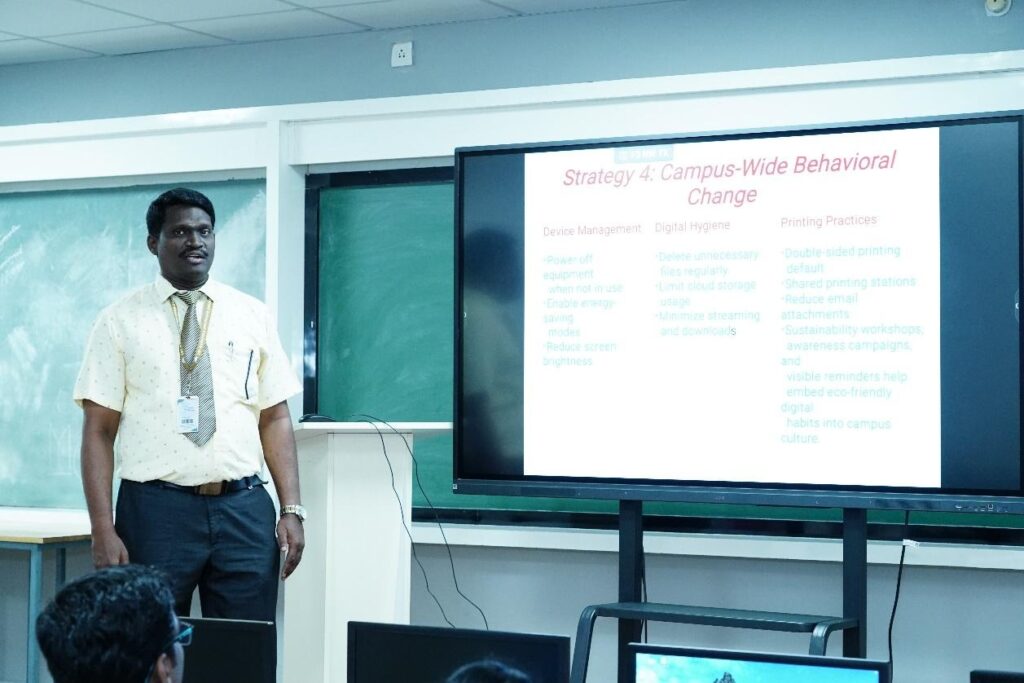
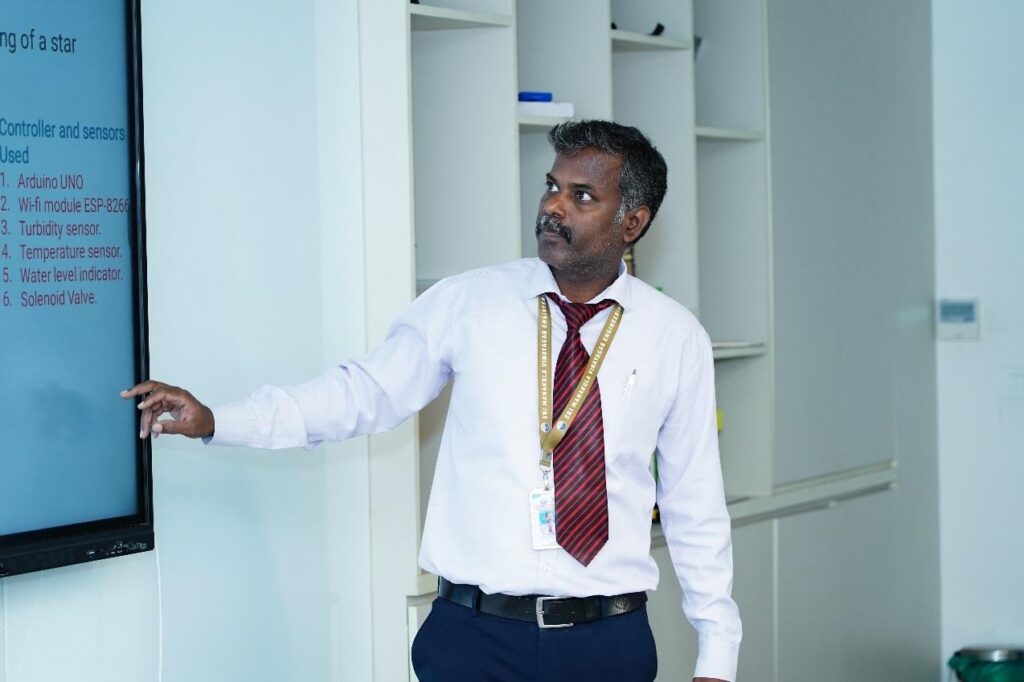
Panel 7 showcased multidisciplinary research integrating Civil Engineering, Instrumentation & Control Engineering, and Biomedical Engineering. The session highlighted sustainability-driven construction solutions, advanced digital infrastructures for Education 5.0, AI-powered classroom systems, and next-generation biomedical technologies. From eco-friendly materials to immersive learning ecosystems and intelligent healthcare innovations, this panel emphasized technology’s growing role in building a sustainable and future-ready world.
Presented Topics – Panel 7
- Role of Supercritical Technology for Sustainable Development Goals (SDGs)
- Sustainable Concrete Development Using Bacillus Subtilis: Mechanical, Durability & Microstructure Improvements
- Green Computing in Universities: Reducing ICT Carbon Footprint in Education 5.0
- Sustainable Digital Infrastructure for Education: A Green EdTech Transformation Approach
- Mechanical Performance Assessment of Ternary Blended Concrete for Sustainable Tech-Enabled Construction
- IoT-Driven Smart Classrooms for Interactive Education
- AI & Immersive Technologies for Sustainable Learning Environments in Education 5.0
- AI-Powered Classroom Monitoring System Using Computer Vision & IoT
- Emotion-Sensitive Immersive Learning System
- Sustainable & Adaptive Education Through Extended Reality (XR)
- Design of Chitosan-Grafted E-Skin with Polymer Crosslinking & Embedded AI Chips
- AI-Powered Pneumonia Detection Using YOLOv8 & ONNX Runtime Web
- Unified Smart Learning Environment Framework for Clinical & Biomedical Education
Panel 8: Advancing Sustainable & Intelligent Ecosystems in Education 5.0 – Paper Presentation Highlights
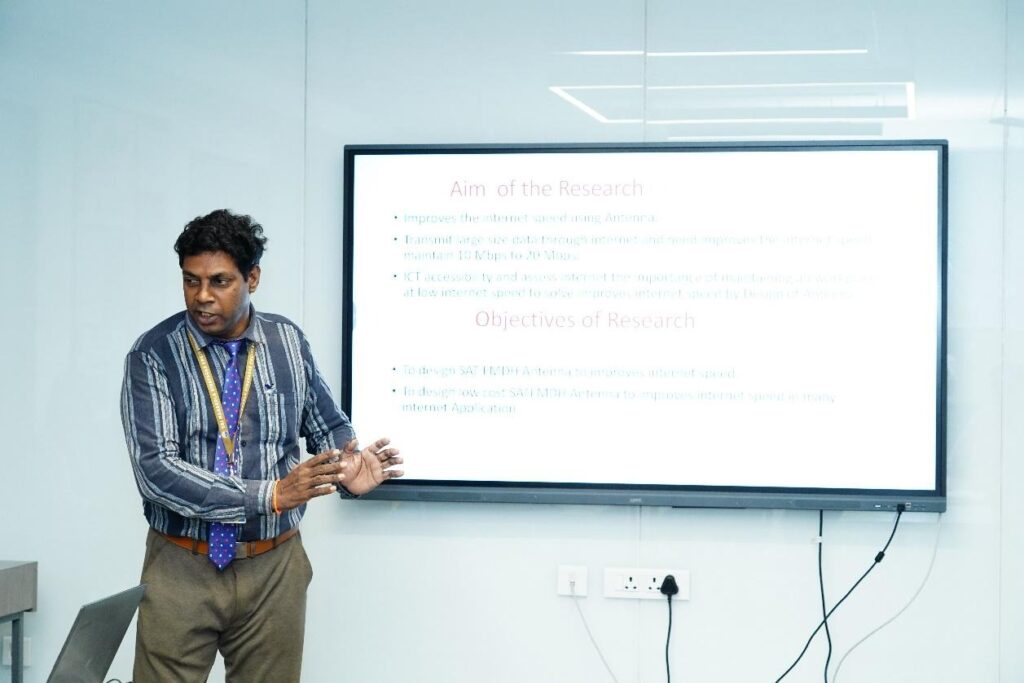
The final panel of the convention showcased interdisciplinary research from MCA, MCTR, CSEBS, Agriculture, Chemistry, Law, and English departments. The presentations highlighted sustainable technologies, AI-driven systems, next-gen educational models, and innovative engineering solutions aligned with Education 5.0 and the UN SDGs.
Panel 8 – Paper Presentation Topics
- A Multi-Perspective Analysis of Circular Economy Frameworks and Waste Management Technologies for Urban India: An Integrated Model
- Green Digital Pedagogy: Leveraging Blockchain and Smart Contracts for Sustainable Educational Governance in Education 5.0
- GPS-Less 3D Inertial Routing System for Multi-Floor Indoor Positioning During Urban Combat Operations
- Optimizing 3D Printer with Dual Filament Extruder System
- Multi-Disciplinary Napkin Incinerator
- Intelligent Safety System for Accident Identification and Prevention
- Optimizing Uninterruptible Power Supply Performance for Increased Efficiency and Reliability
- Augmented Smart Helmet Platform for Advanced Rider Safeguarding
- Institutionalizing Education 5.0: An SDG-Aligned AI-Enabled Research Ecosystem
- A Next-Generation Framework for Sustainable Digital Preservation in Libraries: Innovations, Intelligent Systems, and Future-Ready Strategies
- Immersive Learning Using AR/VR and Metaverse for Future Classrooms
- Digital Mental Well-Being and Emotional Analytics in Education 5.0
- Quantum Computing in Education 5.0: Preparing the Workforce of Tomorrow
- Understanding Supply Chain Management and Its Concepts
- Renewable Energy as a Catalyst for Smart and Sustainable Campus Development
- The Evolving Role of Artificial Intelligence in Legal Education
- From Literature to EdTech: Teaching with AI to Achieve SDGs under NEP 2020
Grand Concluding Panel Discussion: A Collective Exchange of Innovation and Insight
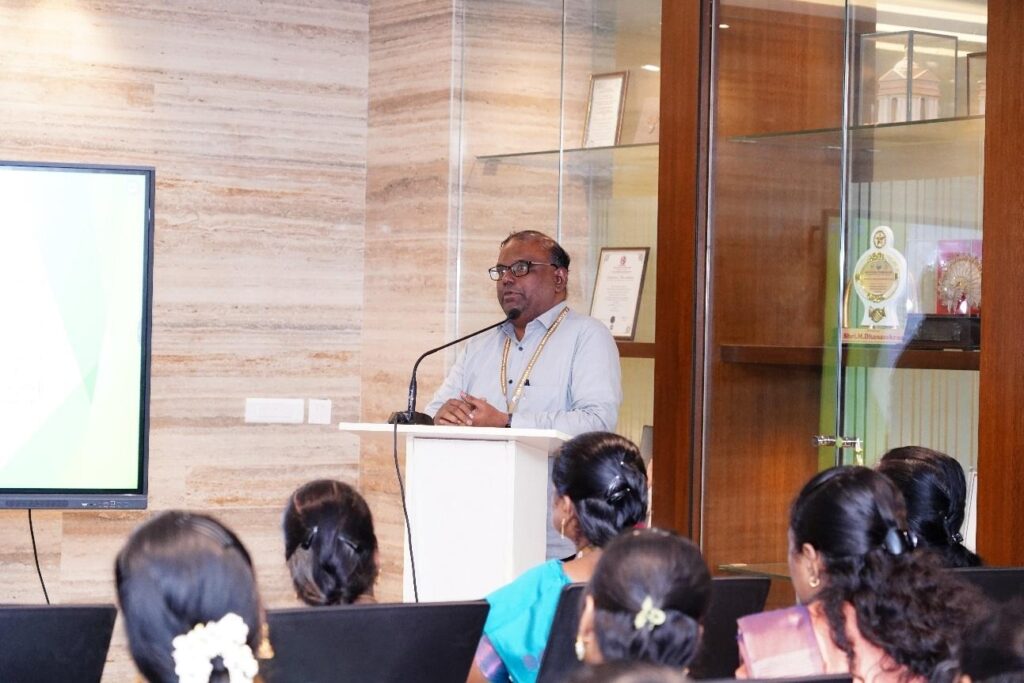
The final segment of Day 2 culminated in a grand combined panel discussion, bringing together all participating faculty members from every department and panel. This unified session served as a platform for cross-disciplinary dialogue, where experts from Engineering, Technology, Management, Science, Law, and Education shared their perspectives on the rapidly evolving landscape of Education 5.0, sustainability, AI-driven innovation, and future-ready learning ecosystems.
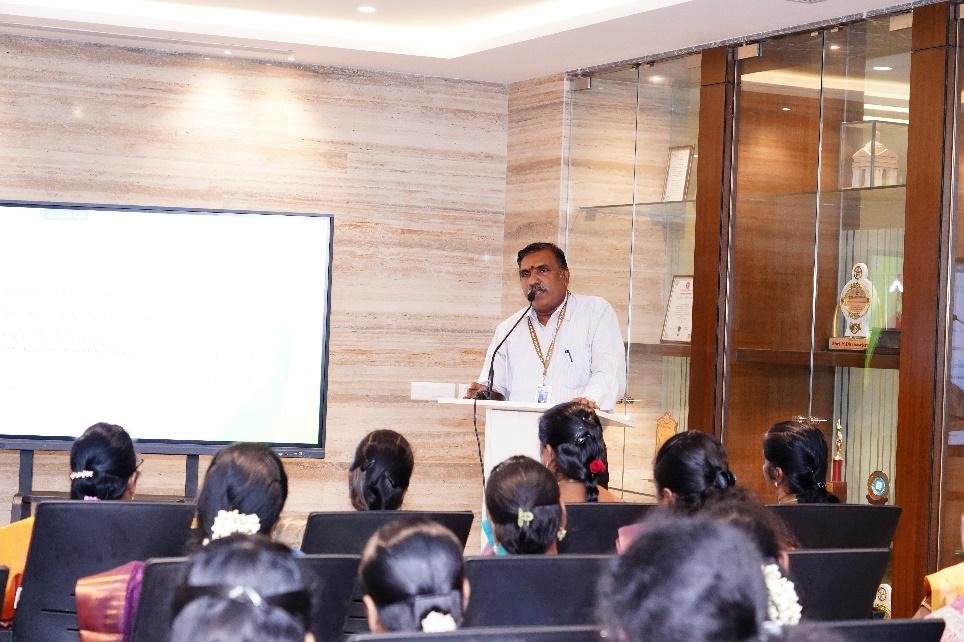
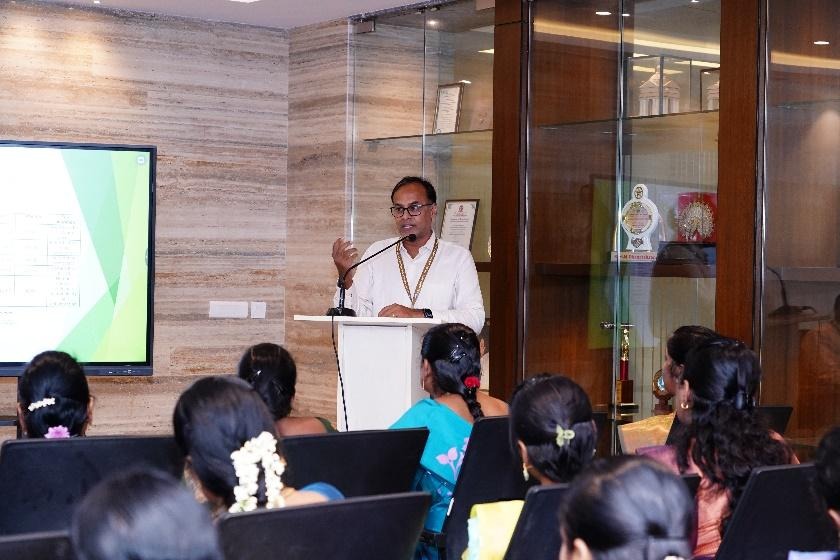
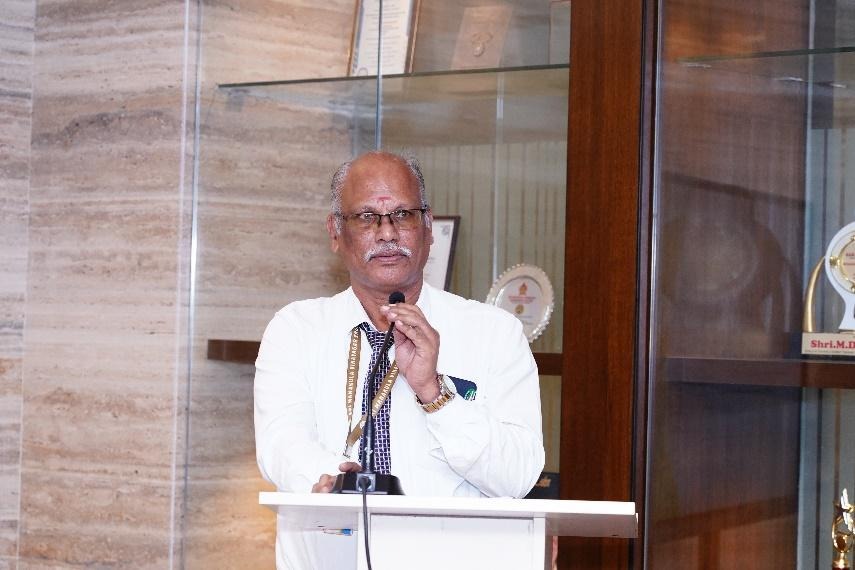
The discussion highlighted the collective expertise of the presenters, fostering an environment where ideas converged, challenges were debated, and forward-looking solutions were proposed. Faculty members reflected on the diverse research topics presented throughout the panels and explored how interdisciplinary collaboration can accelerate institutional growth, academic excellence, and societal impact.
Event Feedback Collection and Grand Conclusion
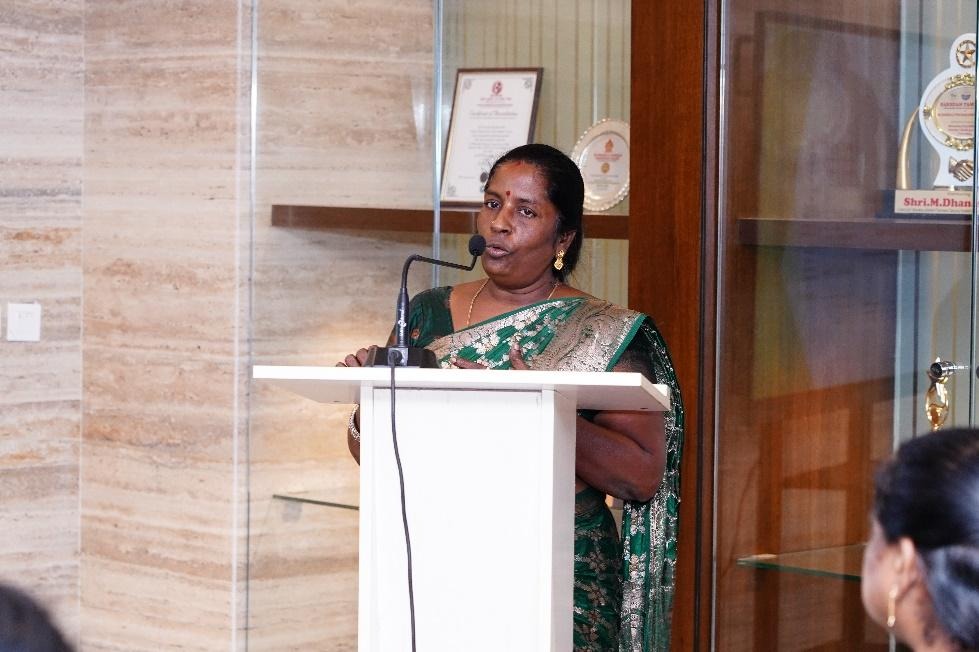
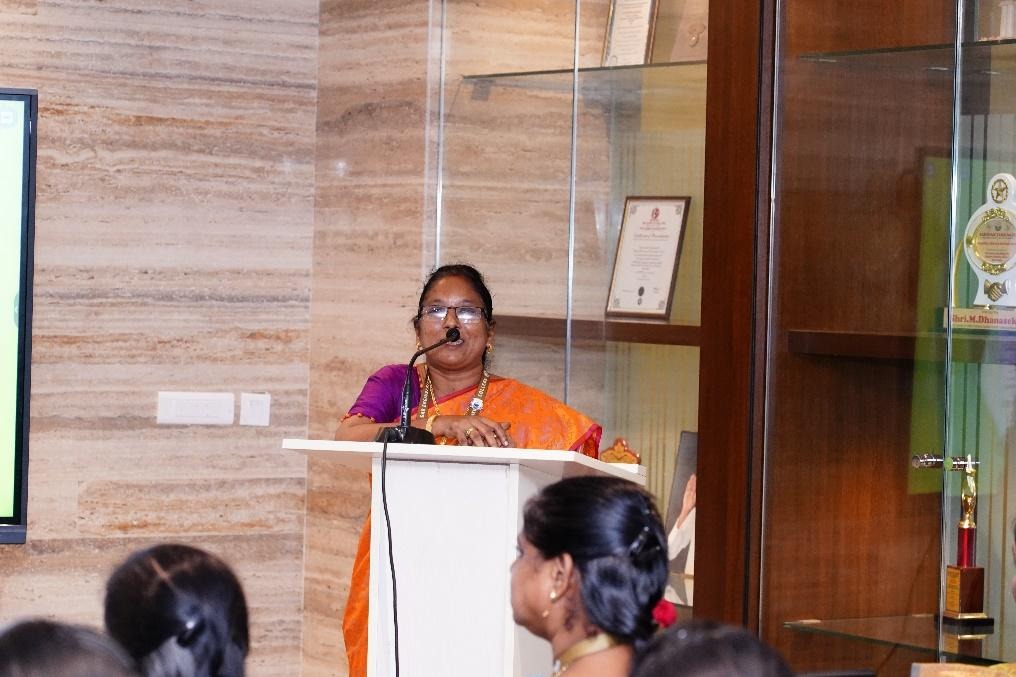
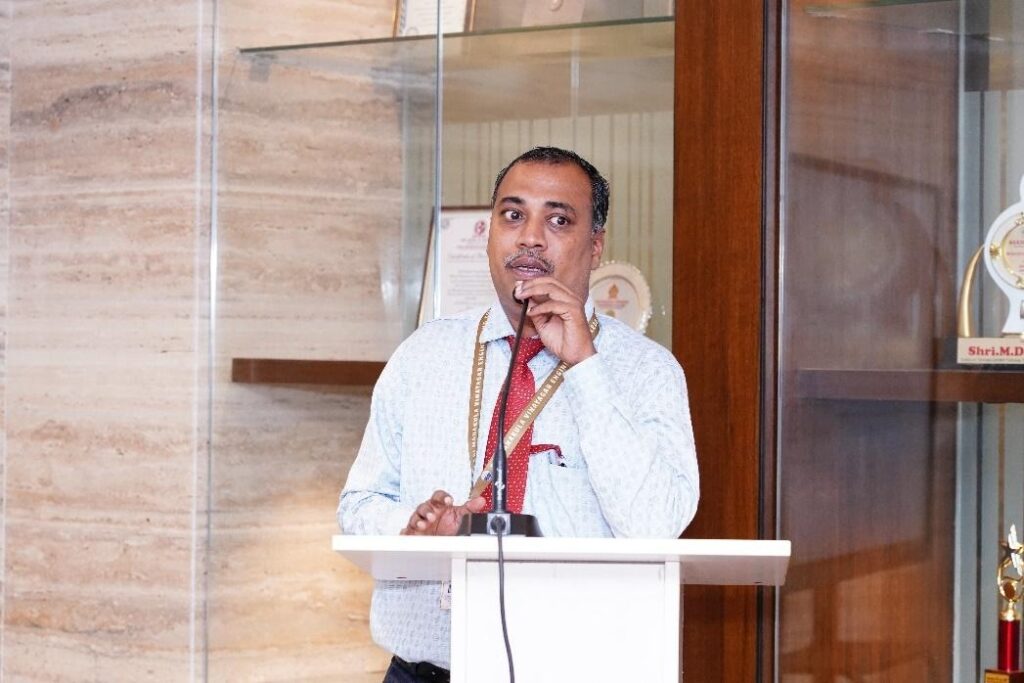
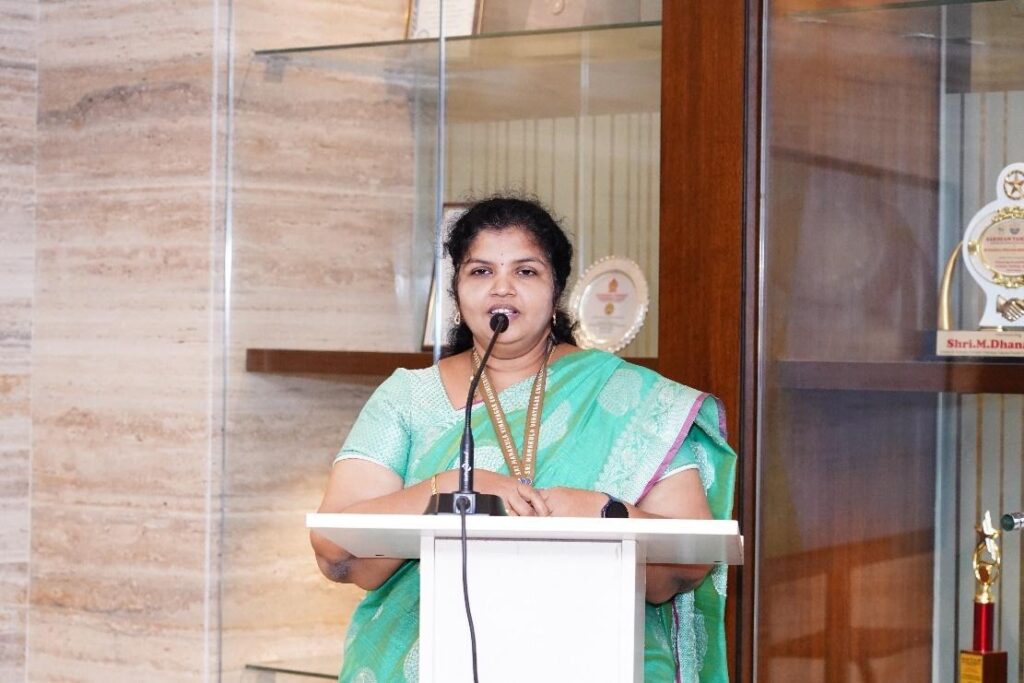
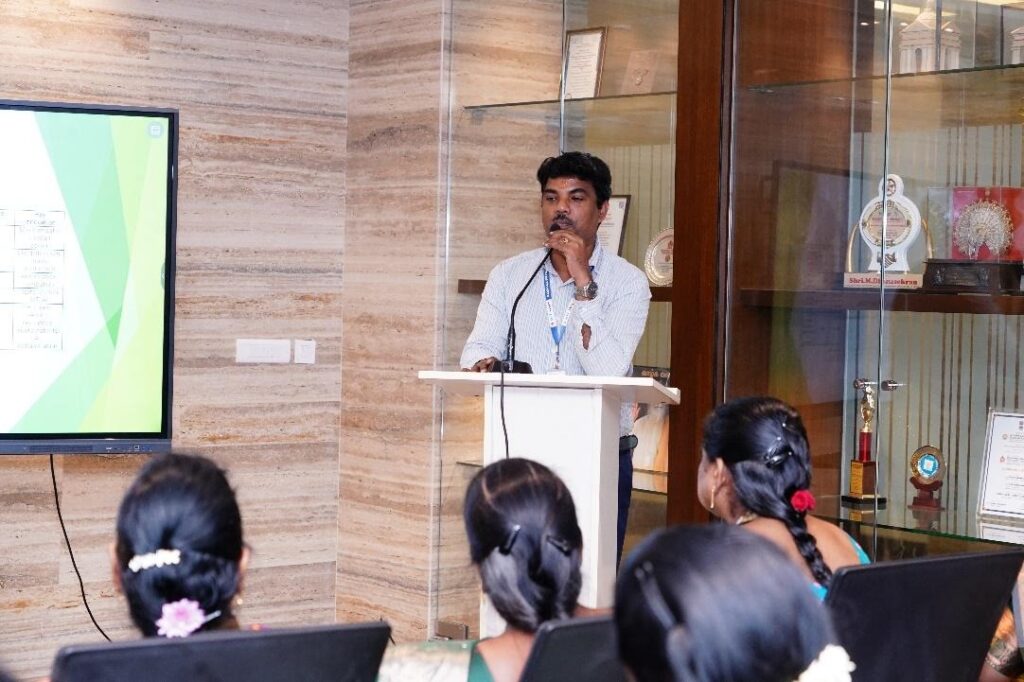
As the sessions came to a close, feedback was collected from all participants, faculty members, and delegates to capture their insights and overall experience of the event. The responses reflected overwhelming appreciation for the organization, content quality, coordination, and the enriching academic environment provided throughout the convention.
The collective feedback confirmed that the event was a grand success, marked by active participation, high-quality presentations, and meaningful interactions across all panels. The positive reviews reinforced the impact of the sessions and highlighted the value the event brought to the academic community. With this encouraging feedback, the convention concluded on a celebratory note, setting a strong foundation for future initiatives and collaborations.