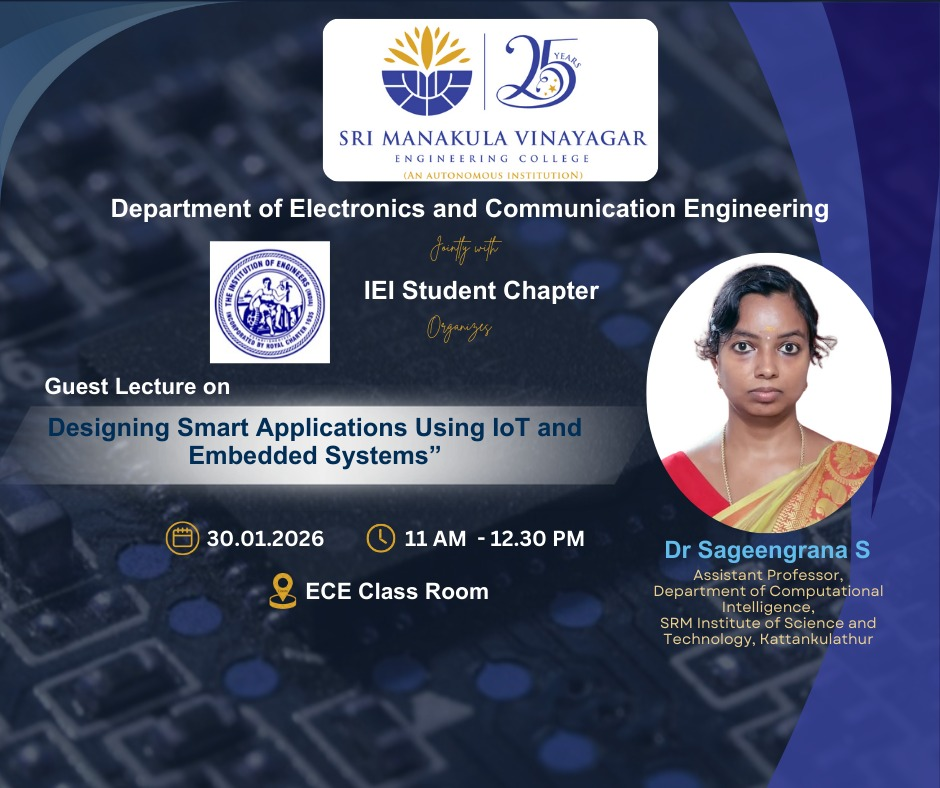
Guest Lecture on Designing Smart Applications Using IoT and Embedded Systems
Date : 30th January 2026
1. Introduction
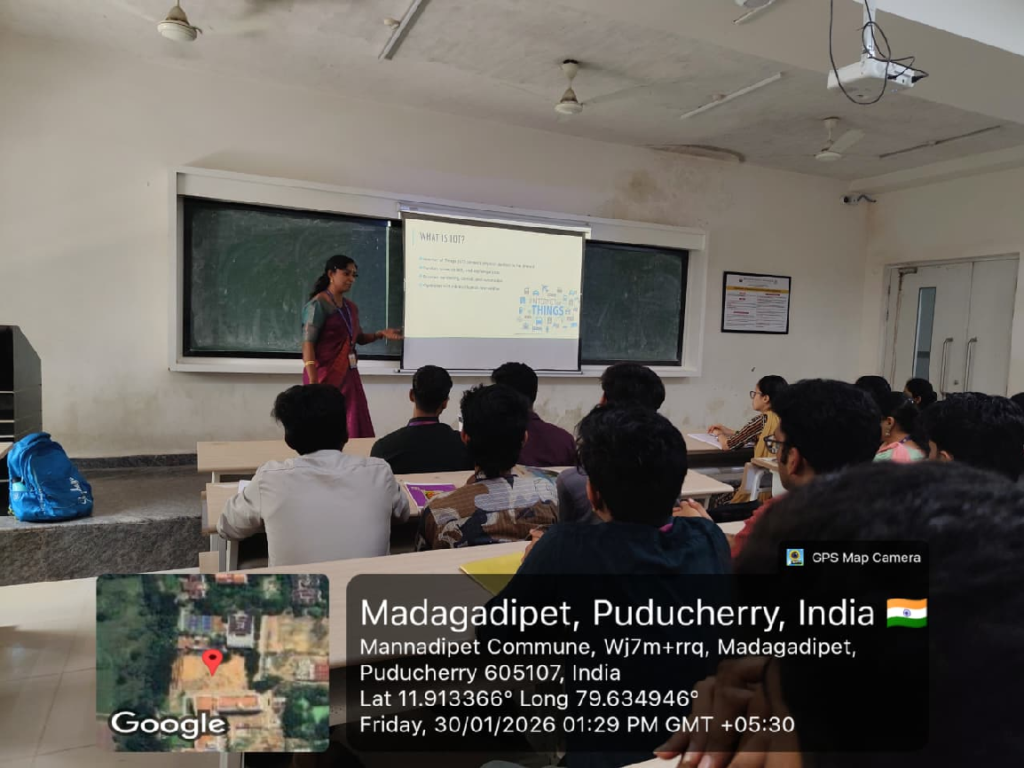
With the rapid advancement of digital technologies, the convergence of Internet of Things (IoT) and Embedded Systems has become a cornerstone in the development of smart and intelligent applications. These technologies are transforming industries such as healthcare, agriculture, transportation, manufacturing, and smart infrastructure by enabling real-time monitoring, automation, and data-driven decision-making. Recognizing the importance of exposing students to these emerging trends, the Department of Electronics and Communication Engineering organized a National-Level Guest Lecture titled “Designing Smart Applications Using IoT and Embedded Systems” on 30th January 2026 (Friday) from 11:00 AM to 12:30 PM at Class Room–309.
The event was sponsored by Sri Manakula Vinayagar Engineering College, Puducherry, and conducted in offline mode for a duration of two hours. The session was delivered by Dr. 5Sageengrana S, Assistant Professor, Department of Computational Intelligence, SRM Institute of Science and Technology, Kattankulathur. The lecture aimed to bridge the gap between classroom learning and real-world applications by providing students with practical insights into IoT architectures, embedded platforms, and smart system design methodologies.
2. Objectives of the Guest Lecture
The primary objectives of organizing this guest lecture were:
● To introduce students to the fundamentals and architecture of IoT and Embedded Systems.
● To provide practical exposure to designing smart applications using sensors, microcontrollers, and cloud connectivity.
● To familiarize students with real-time implementation challenges and industry best practices.
● To encourage innovative thinking and interdisciplinary learning among students.
● To motivate learners to pursue projects, research, and careers in IoT-driven technologies.
3. Overview of the Session
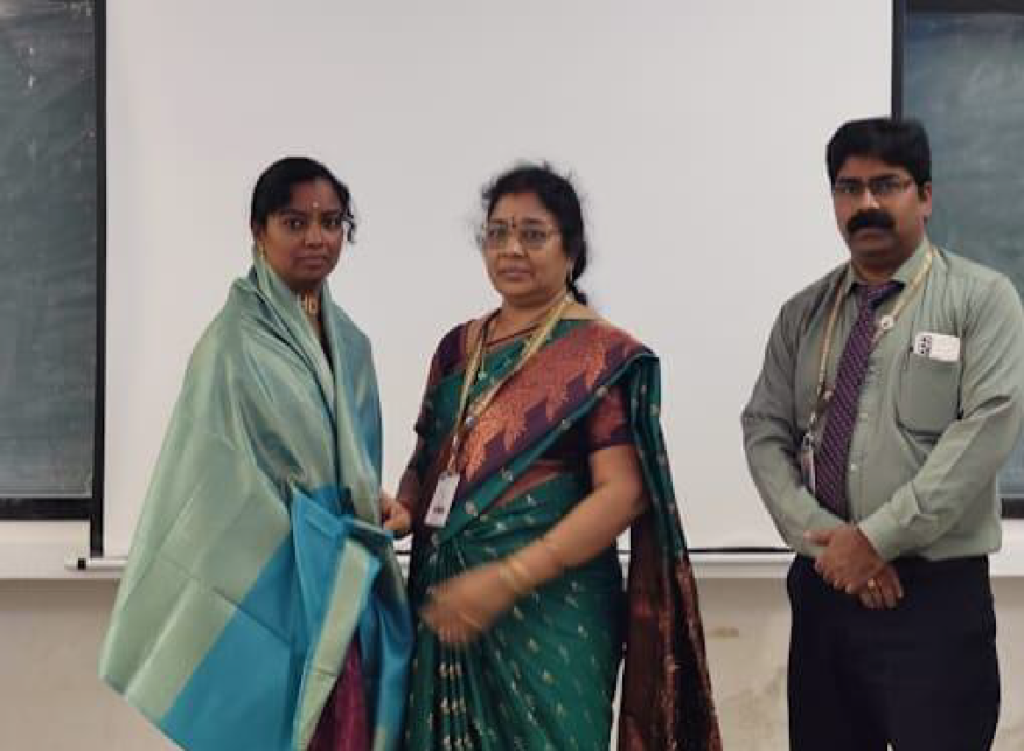
The session commenced with a brief welcome address by the organizing department, followed by the introduction of the resource person. Dr. Sageengrana S began the lecture by outlining the evolution of embedded systems and their transformation with IoT integration. He explained how traditional embedded devices, when connected to the internet, evolve into smart systems capable of sensing, processing, and communicating data in real time.
The lecture covered key concepts such as:
● Basic IoT architecture (sensing layer, network layer, and application layer)
● Role of microcontrollers and embedded boards in smart applications
● Sensor interfacing and data acquisition
● Communication protocols commonly used in IoT systems
● Cloud integration and data analytics
● Security considerations in IoT-based applications
4. Technical Highlights
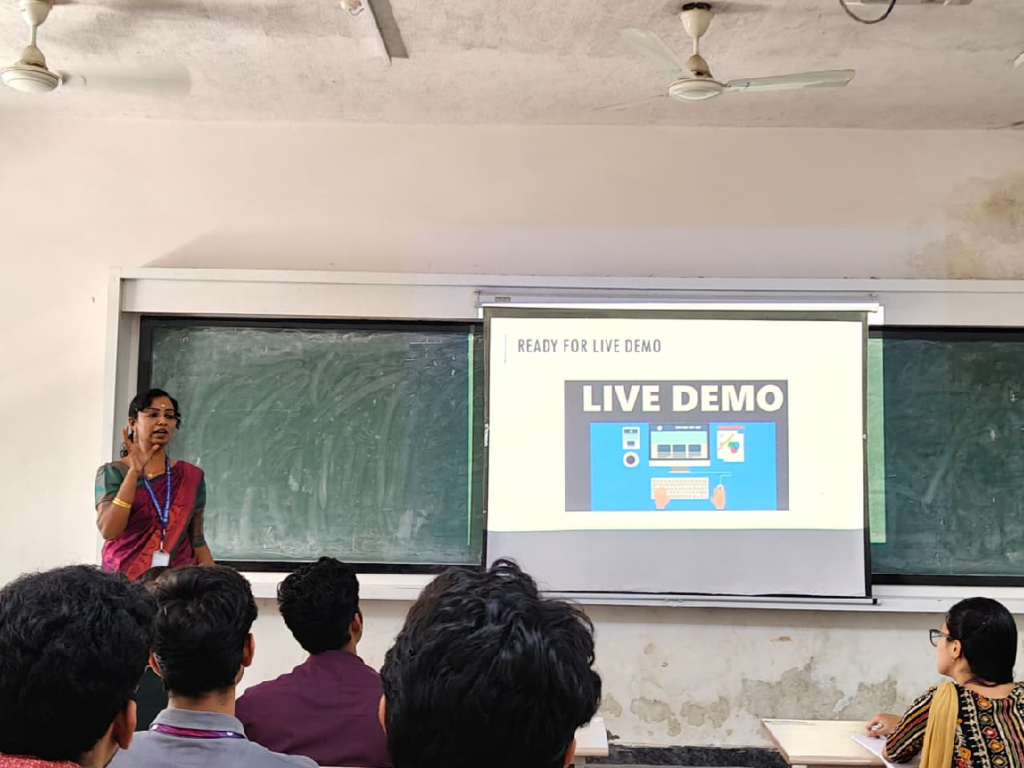
A major highlight of the lecture was the explanation of end-to-end smart application development. The resource person demonstrated how data flows from physical sensors through embedded controllers to cloud platforms and finally to user interfaces such as mobile or web applications. Students gained clarity on:
● Selecting appropriate sensors for specific applications
● Designing embedded firmware for data processing
● Establishing wireless connectivity using standard protocols
● Visualizing data for monitoring and decision-making
The session also addressed practical challenges such as power management, latency, device scalability, and system security. Dr. Sageengrana S stressed the importance of cybersecurity in IoT deployments, highlighting common vulnerabilities and basic protection strategies.
5. Student Interaction and Discussion
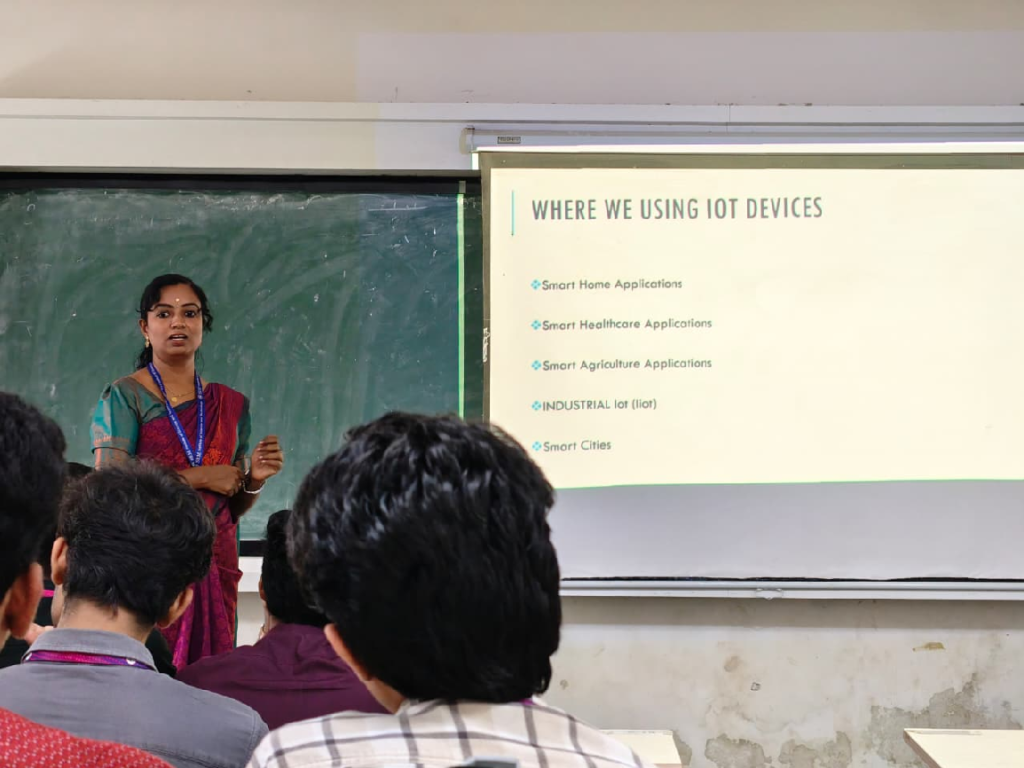
The lecture was highly interactive, with students actively participating in discussions and asking questions related to project implementation, hardware selection, and future career opportunities in IoT and embedded domains. Queries ranged from beginner-level concepts to advanced application design strategies. The resource person provided clear and concise explanations, encouraging students to explore mini-projects and prototype-based learning.
Students expressed keen interest in understanding how IoT can be integrated with artificial intelligence and data analytics to build next-generation smart systems. The discussion session motivated many participants to consider IoT-based final-year projects and research-oriented activities.
6. Outcomes of the Event
The guest lecture achieved its intended objectives and resulted in the following outcomes:
● Enhanced understanding of IoT and Embedded Systems among participants.
● Improved awareness of real-world smart application development.
● Increased motivation for students to undertake hands-on projects and internships in related domains.
● Strengthened linkage between academic learning and industry requirements.
● Encouraged interdisciplinary thinking combining electronics, communication, and computational intelligence.
7. Conclusion
The Guest Lecture on “Designing Smart Applications Using IoT and Embedded Systems” proved to be a highly informative and enriching experience for the students of the Department of Electronics and Communication Engineering. The session successfully provided a practical perspective on how embedded systems and IoT technologies are shaping modern smart applications. The insights shared by Dr. Sageengrana S helped reinforce theoretical concepts while inspiring students to explore innovative solutions to real-world problems.
Overall, the program served as an effective platform for knowledge enhancement, technical skill development, and career orientation. The department extends its sincere gratitude to the resource person and the sponsoring institution for their valuable support in making this academic event a success.